Tag: dua

  • The Condition of People at the Time of Their Death

    The Condition of People at the Time of Their Death

    These are the three types of conditions that people face upon their death. Either they are among the near believers or those below their rank on the right, or those who denied the truth, were led astray from the guidance and were ignorant about Allah. Allah said,

    Surah Al-Waqiah

    (88. Then, if he be of the Muqarrabin,) (89. Then Rawh, Rayhan and a Garden of Delights.) (90. And if he be of those on the right,) (91. Then Salam (peace) to you from those on the right.) (92. But if he be of the denying, the erring,) (93. Then for him is an entertainment with Hamim.) (94. And entry in Hellfire.) (95. Verily, this! This is an absolute truth with certainty.) (96. So, glorify with praises the Name of your Lord, the Most Great.)

    (Then if he), in reference to the dying person,

    (be of the Muqarrabun) who fulfilled the obligations and the recommended acts of worship and avoided the forbidden and disliked matters and even some of the allowed,

    (then for him Rawh, Rayhan and a Garden of Delights.) Theirs will be Rawh and Rayhan; and the glad tidings of these traits will be conveyed to them by the angels at the time of death. The Prophet’s Hadith narrated from Al-Bara’ in which the angels of mercy say (to a dying, believing person),

    (O good soul in the good body that you inhabited, come to Rawh, Rayhan and a Lord Who is not angry.) `Ali bin Abi Talhah reported from Ibn `Abbas, “Rawh means rest, and Rayhan means place of rest.’‘ Mujahid said similarly that Rawh means rest. Abu Hazrah said that Rawh means: “Rest from the world.” Sa`id bin Jubayr and As-Suddi said that it means to rejoice. And from Mujahid:

    (Rawh and Rayhan) means: “Paradise and delights.” Qatadah said that Rawh means mercy. Ibn `Abbas, Mujahid and Sa`id bin Jubayr said that Rayhan means provisions. All of these explanations are correct and similar in meaning. The near believers who die will earn all of these; mercy, rest, provision, joy, happiness and good delights,

    (and a Garden of Delights.) Abu Al-`Aliyah said, “None of the near believers will depart (this life) until after he is brought a branch of the Rayhan of Paradise and his soul is captured in it.” Muhammad bin Ka`b said, “Every person who dies will know upon his death if he is among the people of Paradise or the people of the Fire.’‘ In the Sahih, it is recorded that the Messenger of Allah said,

    (The souls of the martyrs live in the bodies of green birds flying wherever they wish in the Gardens of Paradise, and then rest to their nests in chandeliers hung from the Throne of the Almighty....) Imam Ahmad recorded that `Ata’ bin As-Sa’ib said, “The first day I saw `Abdur-Rahman bin Abi Layla, I saw an old man whose hair had become white on his head and beard. He was riding his donkey and following a funeral. I heard him say, `So-and-so narrated to me that he heard the Messenger of Allah say,

    (He who likes to meet Allah, Allah likes to meet him, and he who hates to meet Allah, Allah hates to meet him.) The people around him started weeping, and he asked them why they wept. They said, `All of us hate death.’ He said,

    (It does not mean that. When one dies: (Then, if he be of the near believers, then for him are Rawh, Rayhan, and a Garden of Delights.)( and when this good news is conveyed to him, he likes to meet Allah the Exalted and Most Honored and Allah the Exalted and Most Honored likes, even more, to meet him, (But if he be of the denying, the erring, then for him is an entertainment with Hamim. And entry in Hellfire.)( and when this news is conveyed to him, he hates to meet Allah and Allah hates, even more, to meet him.)” This is the narration that Imam Ahmad collected; and in the Sahih, there is a Hadith with this meaning collected from `A’ishah. Allah’s statement,

    (And if he be of those on the right,) means, if he, the dying person, is among those on the right,

    (Then Salam (peace) to you from those on the right) meaning, the angels will deliver the good news to them by saying, “Peace be upon you,” i.e., be calm, you will be led to safety, you are among those on the right, as `Ikrimah said, “The angels will greet him with the Salam and convey to him the news that he is among those on the right. ” This is a good explanation, and it conforms with Allah’s statement,

    (Verily, those who say: “Our Lord is Allah.” and then they stand firm, on them the angles will descend (at the time of their death) (saying): “Fear not, nor grieve! But receive the glad tidings of Paradise which you have been promised! We have been your friends in the life of this world and are (so) in the Hereafter. Therein you shall have (all) that your souls desire, and therein you shall have (all) for which you ask. An entertainment from the Oft-Forgiving, Most Merciful.”) (41:30-32). Allah’s statement,

    (But if he be of the denying, the erring, then for him is an entertainment with Hamim (boiling water) and entry in Hellfire.) meaning, if the dying person is one of those who denied the truth, who were led astray from guidance,

    (then for him is an entertainment,) meaning, as a guest

    (with Hamim) that dissolves his intestines and skin,

    (And entry in Hellfire.) he will reside in Hellfire, which will engulf him from every direction. Allah the Exalted said, next,

    (Verily, this! This is an absolute truth with certainty.) meaning, this news is the truth; there is no doubt about it, nor escape from it for anyone,

    (So, glorify with praises the Name of your Lord, the Most Great.) Jabir narrated that the Messenger of Allah said,

    (He who says, “Glory be to Allah the Magnificent and with His praise!” then a date tree will be planted for him in Paradise.) This Hadith was collected by At-Tirmidhi and An-Nasa’i; At-Tirmidhi said, “Hasan Gharib.” Al-Bukhari recorded in his book (Sahih) that Abu Hurayrah said that the Messenger of Allah said,

    ((There are) two statements that are light on the tongue, but heavy on the Balance, and most beloved to Ar-Rahman: “Glory be to Allah and with His praise, glory be to Allah the Magnificent.”) The Group, with the exception of Abu Dawud, collected this.
  • Brittle bone disease

    Brittle bone disease

    Be thankful to Allah Subhaanahu wata’ala

     We can never count Allah’s Blessings.

    Allah Subhaanahu wata’ala says:
    “Is, then, He Who creates comparable to any that cannot create? Will you not, then, take heed? For should you try to count Allah’s blessings, you could never compute them” (An-Nahl 16:17-19).

    We thank Allah for our own benefit:

    If you are ungrateful, Allah is unaffected. If you become grateful, then you have taken the first step towards becoming a true Believer. It is for this reason that the Prophet (Sallal laahoo alaihi wassallam ) exhorted us to “Love Allah, as we benefit from His grace” (Tirmidhi).

    Allah Subhaanahu wata’ala reminds us: ” And whoever is grateful, he is only grateful for the benefit of his own self” (Luqman 31:12)

    For surely if it was not for the grace of Allah on you and His mercy, you would have been among the losers” (Al-Baqarah 2:64).

    There are so many diseases Allah Subhaanahu wata’ala has Saved us from. Only a single mutation in the genes can lead to disastrous outcomes.

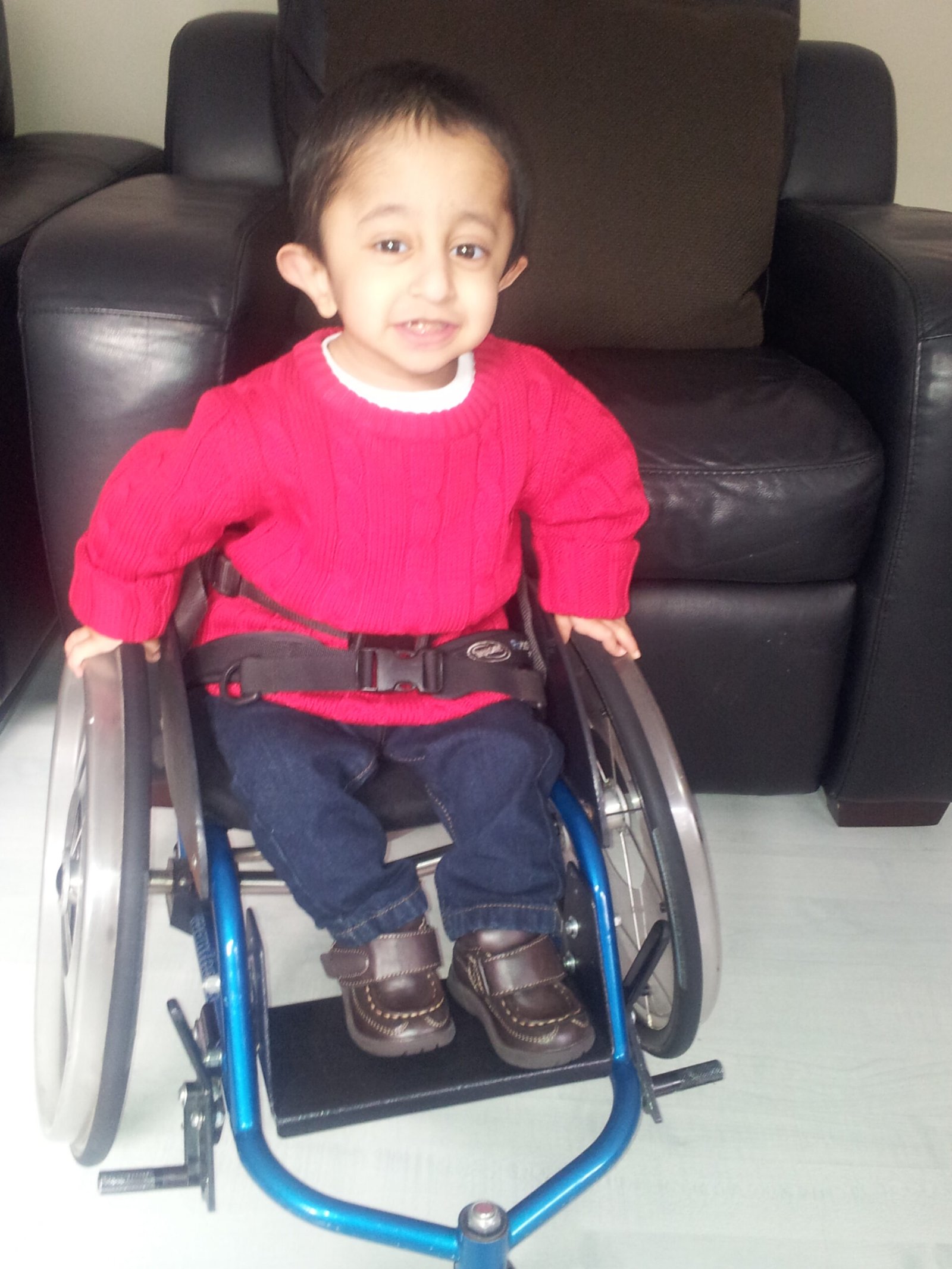
    Osteogenesis imperfecta i.e imperfect bone formation (OI) is a group of genetic disorders that mainly affect the bones. It results in bones that break easily. The severity may be mild to severe

    As well as frequent fractured bones, people with osteogenesis imperfecta may have muscle weakness, hearing loss, fatigue, lax or excessively flexible joints, curved bones, curvature of the spine (scoliosis), blue colour to the whites of the eye (blue sclera), brittle teeth (dentinogenesis imperfecta), and poor growth (short stature).

    OI is caused by genetic defects that affect the body’s ability to make strong bones. In dominant (classical) OI, a person has too little type I collagen or a poor quality of type I collagen due to a mutation in one of the type I collagen genes. Collagen is the major protein of the body’s connective tissue. It is part of the framework that bones are formed around. The result in all cases is fragile bones that break easily.


    Type II

    • Most severe form.
    • Frequently lethal at or shortly after birth, often due to respiratory problems.
    • In utero fractures


    Patient Story

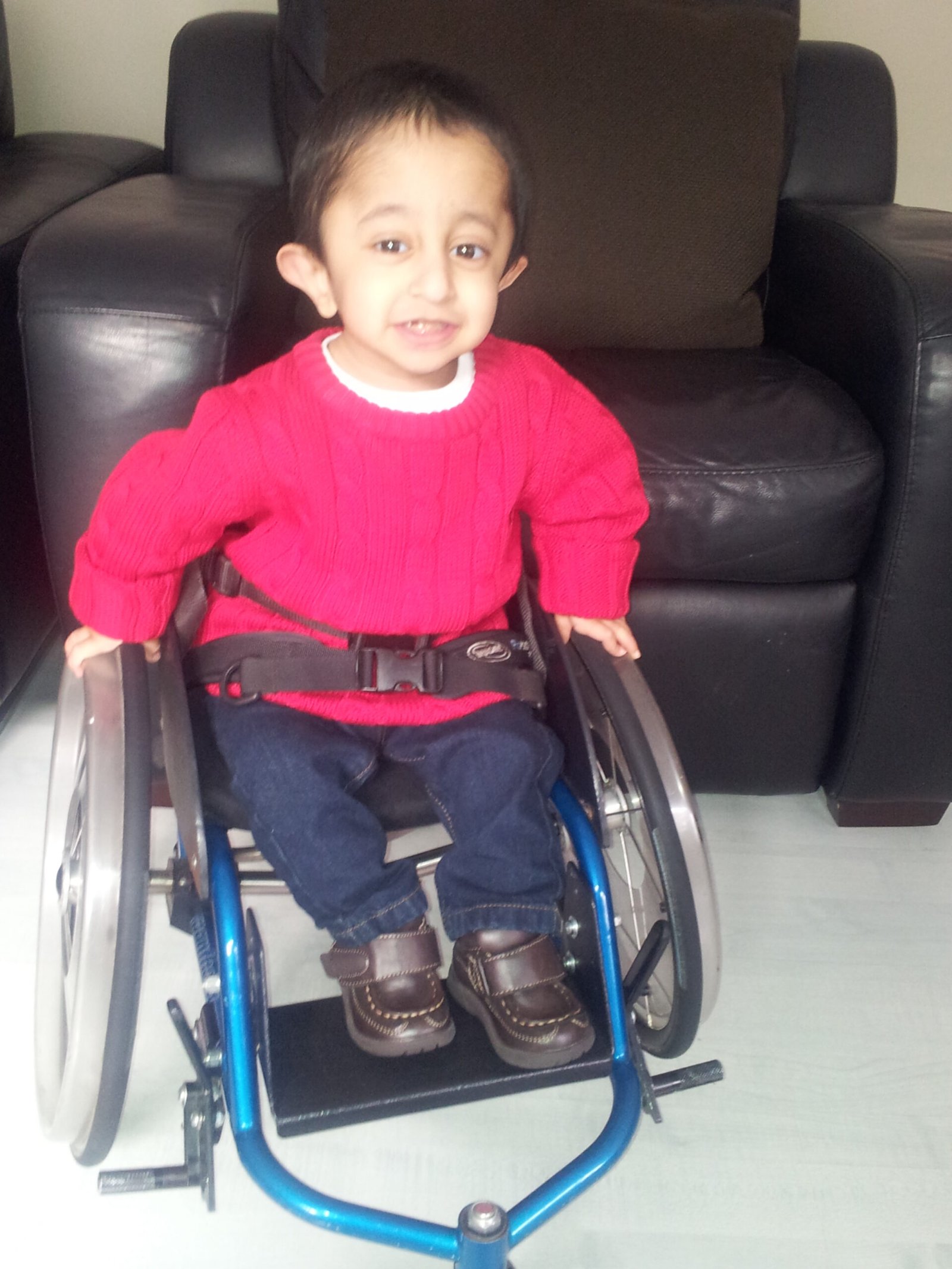
    Raheem Habib talks about his experience of having brittle bones.

    “I break my bones very easily because I have brittle bones. I have so far broken my legs five times and my arms twice.”


    Treatment:

    There is no cure. Maintaining a healthy lifestyle by exercising and avoiding smoking can help prevent fractures. Treatment may include care of broken bones, pain medication, physical therapy, braces or wheelchairs, and surgery. A type of surgery that puts metal rods through long bones may be done to strengthen them.

    We are always complaining about how unfair life is. We keep showing ingratitude to our Creator. We get upset over the things that we don’t have ,yet how many times a day do we thank Allah Subhaanahu wata’ala for His countless favours, for all the blessings He Gave us without even asking?

    Always say ALHUMDULILLAH for all His blessings.


    “So which of the favors of your Lord would you deny?” (Surah Ar-Rahmaan)

    Click here for a beautiful dua to stay protected from diseases and accidents

  • Protect yourself from Deep vein Thrombosis

    Protect yourself from Deep vein Thrombosis


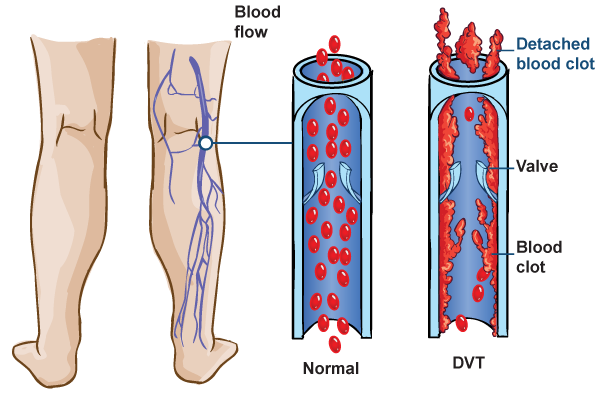
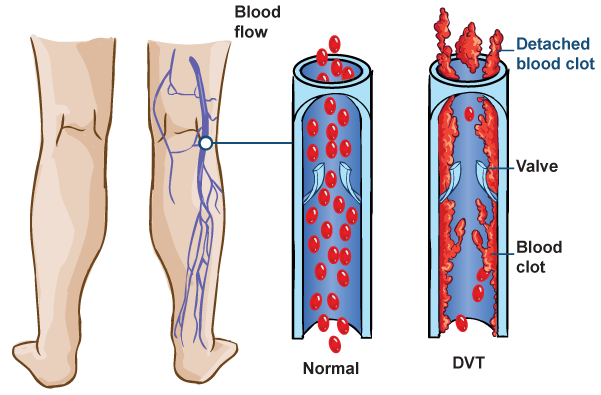
    Deep vein thrombosis, a blood clot that forms in a deep vein, usually in a leg, might be the most serious health risk you’ve never heard of. It can be a serious risk for some long-distance travelers. Traveling more than four hours, whether by air, car, bus, or train, can be a risk for blood clots.

    Cause:

    Blood clots can form in the deep veins (veins below the surface that are not visible through the skin) of your legs during travel because you are sitting still in a confined space for long periods of time. The longer you are immobile, the greater is your risk of developing a blood clot. Many times the blood clot will dissolve on its own. However, a serious health problem can occur when a part of the blood clot breaks off and travels to the lungs causing a blockage. This scenario is called a pulmonary embolism, and it can be fatal.

    When you walk, the muscles of the legs squeeze the veins and move blood to the heart. Soleus,a muscle at the back of the leg, is also responsible for pumping venous blood back into the heart from the periphery, and is often called the skeletal-muscle pump, peripheral heart or the sural pump.

    Any long period of immobility, such as being bedridden from illness, recovering from surgery, or sitting for extended periods while traveling, is a risk factor for DVT and pulmonary embolism.

    Click here for all the duas which can be recited for Good Health

    Situations that can lead to it

    • Prolonged immobility
    • long airplane flights or road trips
    • prolonged bed rest after surgery
    • pregnancy
    • genetic blood clot disorders.
    • Obesity

    How to minimize your risk

    Don’t take a very long trip without stopping every couple of hours. Get out and walk a bit. No matter what the mode of transportation, sitting motionless for long periods may put some travelers at an increased risk for deep vein thrombosis (DVT), a blood clot in a vein deep within the muscles, usually in the calf or thigh.

    Take Breaks on a Long Road Trip

     Stay Hydrated on a Long Flight

    Keep up With Meds When on Vacation

    If your doctor has told you to take low-dose aspirin or other anticoagulant medicines daily to prevent a blood clot, take them as prescribed no matter where you are or what you’re doing.

    Keep Moving When You’re Pregnant

    When you’re pregnant, natural changes in your body reduce blood flow and make your blood more likely to clot, conditions that continue for several weeks after baby is born.

    Click here for duas which can be recited during Pregnancy

    Symptoms:

    About half of people with DVT have no symptoms at all. The following are the most common symptoms of DVT that occur in the affected part of the body (usually the leg or arm):

    1. Swelling of your leg or arm
    2. Pain or tenderness that you can’t explain
    3. Skin that is warm to the touch
    4. Redness of the skin

    Protect Yourself and Reduce Your Risk of Blood Clots During Travel

    • Be alert to the signs and symptoms of blood clots.

    • Reduce the risk while traveling

    • Move your legs frequently when on long trips and exercise your calf muscles to improve the flow of blood. If you’ve been sitting for a long time, take a break to stretch your legs. Extend your legs straight out and flex your ankles (pulling your toes toward you). Pull each knee up toward the chest and holding it there with your hands on your lower leg for 15 seconds, and repeat up to 10 times. These types of activities help to improve the flow of blood in your legs.
    • If you are at risk, talk with your doctor to learn more about how to prevent blood clots. For example, some people may benefit by wearing graduated compression stockings.
    • If you are on blood thinners, also known as anticoagulants, be sure to follow your doctor’s recommendations on medication use.

    Click here for a dua for your protection from DISEASES and INSANITY


  • The Reasons Which Cause Love of Allāh


    The reasons which cause love of Allāh to develop, are TEN:

    First : Reciting the Qur‘ân, reflecting and understanding its meaning and its intent.

    Second: Drawing closer to Allāh – the Most High – through optional deeds, after fulfilling the obligatory duties.

    Third: Being continuous in the dhikr (remembrance) of Allāh, with the tongue, the heart and the limbs – under all circumstances. The more constant the dhikr, the more mahabbah develops and intensifies.

    Fourth: Giving precedence to what Allāh loves over personal loves, when being overcome by desires.

    Fifth: Contemplating and deliberating over the Names and Attributes of Allāh.

    Sixth: Recognising and remembering the favours and bounties of Allāh – both the manifest and hidden.

    Seventh: To be humble and submissive before Allāh – and this is the greatest matter.

    Eighth: To be in seclusion reciting the Qur‘ân, during that time in which Allāh descends to the lowest heaven (which is the last third of every night), finishing this recitation with seeking Allâh’s forgiveness and repenting to Him.

    Ninth: To sit in the gatherings of true and sincere lovers of Allāh, reaping the fruits of their speech, and not to speak except if there is benefit in it and that you know that such talk will increase you in goodness and that it will benefits others as well.

    Tenth: To stay clear of all those causes which distances the heart from Allāh – the Mighty and Majestic.

    So these are the ten reasons which cause the person to develop true love for Allāh and to reach the rank of al-muhabbah, by which he reaches his Beloved.” [Madārijus-Sālikīn  (pp.470-473)


    Source: Foundations of True Faith : Love for Allah – Al-Ibānah Magazine , Issue No.1 – By Shaykh ’Abdur-Rahmân ibn Hasan Ālush-Shaykh , Fathul-Majīd Sharh Kitābit-Tawhīd (pp.470-473)


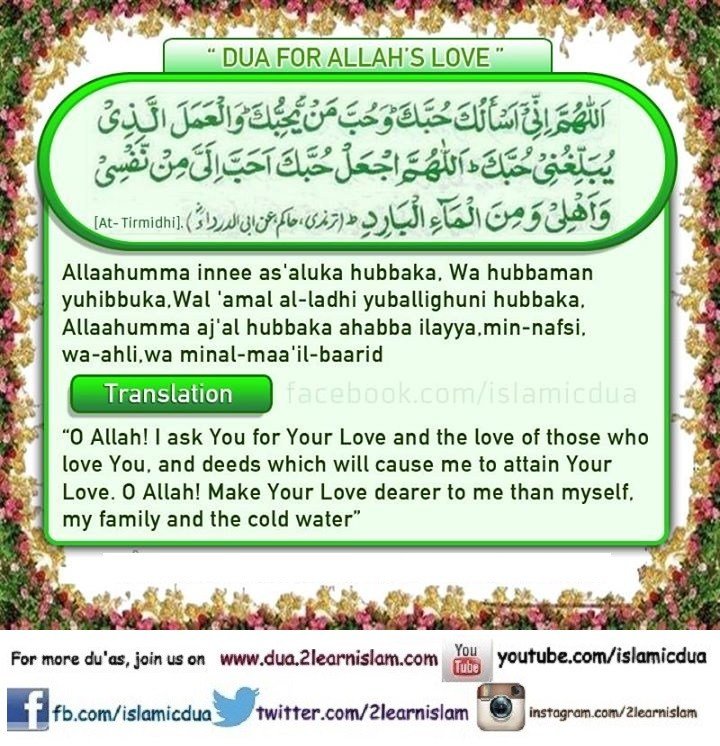
    Dua to gain ALLAH’S LOVE, love of other people and good deeds


    Click here for this dua

  • Why is dua not answered sometimes?

    Why is dua not answered sometimes?

    dua-reminder


    • Allaah says: ‘‘And your Lord says: Call upon Me and I will respond to your supplication. Verily those who are too arrogant to worship Me will, enter Hell in humiliation.’’ [Surah Ghaafir 40:60]
      ]
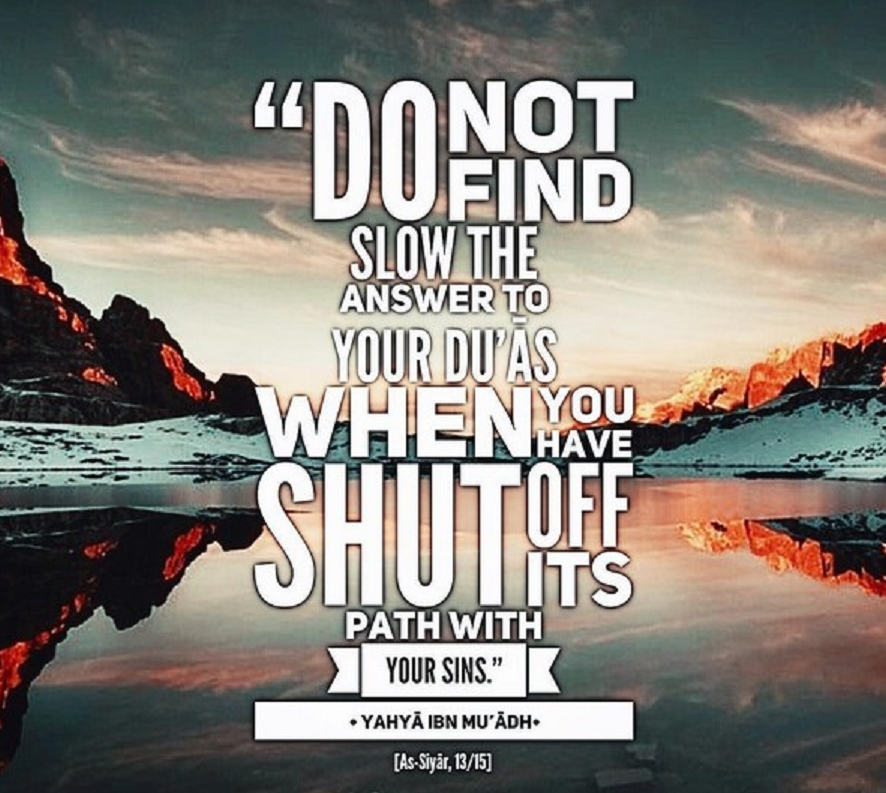
      The questioner stated that he did indeed make du’aa (supplication) to Allaah – the Mighty and Majestic – but it was not answered by Allaah. So he is in doubt with respect to this noble aayah (verse), in which Allaah promises to answer the one who supplicates to Him, and indeed Allaah – the Most Perfect – never breaks His promise.So the clarification of this is that there are certain conditions that need to be fulfilled in order for a supplication to be answered. These conditions are:


    • Firstly: Sincerity to Allaah – the Mighty and Majestic. That is to say, one must be sincere in his du’aa (supplication), so he turns to Allaah – the One free from all imperfections with an attentive heart, being truthful in his turning to Him, knowing that Allaah – the Most Perfect, the Most High – is capable of answering his du’aa (supplication) and hoping that the du’aa will be answered.
    • Secondly: During du’aa, the caller should feel that he is in need of Allaah – the Most Perfect, the Most High – in fact in dire need; and that only Allaah alone answers the supplication of the one in distress and the One who removes evil.
    • Thirdly: That the one making du’aa should refrain from haraam (unlawful) matters, as this acts as a barrier between the person and his du’aa (supplication) being answered – as has been established in the authentic hadeeth, from the Prophet (sallallaahu ’alayhi wa sallam) who said: ‘‘Indeed Allaah – the Most High -is good and accepts only that which is good. Allaah has ordered the Believers to do that which He commanded the Messengers. Allaah – the Most High -has said: ‘‘O you Messengers! Eat of the good things and do righteous actions.’’ [Surah-Mu‘minoon 3:51 ]And Allaah – the Most High – says: ‘‘O you who Believe! Eat of the good things wherewith We have provided you. ’’ [Suratul-Baqarah 2:172]Then he mentioned (the case of) a man who, having journeyed far is disheveled and dusty and who spreads out his bands to the sky (saying): ‘O Lord! O Lord,’ whilst his food is unlawful, his drink unlawful and he is nourished unlawfully. So how can he be answered!’ [2] So the Prophet (sallallaahu ’alayhi wa sallam) explained the unlikelihood that this person’s du’aa would be answered, even after fulfilling the apparent factors which aid the du’aa being answered. The apparent factors being: [i]: Raising ones’ hands towards the sky, meaning towards Allaah – the Mighty and Majestic – since Allaah is above the heavens, above His ’Arsh (Throne). Extending the hands out towards Allaah -the Mighty and Majestic – is amongst the causes of du’aa being responded to, as is shown in the narration from the Prophet (sallallaahu ’alayhi wa sallam) that he said: ‘‘Indeed your Lord is Alive, Most generous. He feels shy that when his servant raises his bands towards Him, calling upon Him, that He should return him empty, having nothing.’’[3]

    Click here to learn authentic duas from the Holy Quran and the Hadiths

    • [ii]: This man called upon Allaah – the Most High – using the name Rabb (Lord). Seeking the means of nearness to Allaah, with this name is also regarded as one of the causes for du’aa to be responded to, since the Rabb is the Creator, the Owner, the Governor of all affairs – and the reigns of the Heavens and the earth are in His Hands. Due to this, you will find that most of the supplications made in the Noble Qur‘aan are by this name: ‘‘Our Lord! We have heard the call of one calling us to faith: ‘Believe you in the Lord,’ and we have believed. Our Lord! Forgive us our sins, and remit from us our evil deeds, and take to Yourself our souls in the company of the righteous. Our Lord! Grant us what You did promise unto us through Your Messengers, and do not disgrace us on the Day of judgement, for You never break Your promise. And their Lord has accepted of them, and answered them: Never will I suffer to be lost the work of any of you, whether male or female.’’ [Soorah Aal-‘lmraan 3:193-195]
    •  [iii]: This man was a traveller, and journeying is often a cause for du’aa to be responded to, because a person feels more in need of Allaah – the Mighty and Majestic – when travelling, than when a person is resident with his family. He was dusty and dishevelled, seeming very insignificant in himself, as if the most important thing to him was to implore Allaah and to call upon Him – in any condition he may be – whether dusty and dishevelled, or in ease and oppulance. Being dusty and dishevelled is also instrumental, like in the hadeeth attributed to the Prophet (sallallaahu ’alayhi wa sallam) in which he said: Indeed Allaah boasts to the people of the Heaven about the people standing at ’Arafah, saying: ‘‘Look at My servants who have come to Me dusty and dishevelled.’’ [4] However, these factors did not bring about anything, because his food, his nourishment and his clothing were all haraam (unlawful). So the Prophet (sallallaahu ’alayhi wa sallam) remarked: ‘‘So how can he be answered!’’

    Therefore, if these conditions are not satisfied, then the question concerning the du’aa (supplication) being answered will seem distant. However, if the conditions are satisfied and the one supplicating is still not answered, then this is due to a wisdom which Allaah – the Mighty and Majestic – knows, and the one supplicating does not know what this wisdom is; and maybe that you like a thing and it is bad for you.

    So when these conditions are fulfilled and the one supplicating is not answered, then either he has been protected from an evil which is greater than what he has asked for, or Allaah stores it for him until the Day of Resurrection, and he then gets a greater reward.

    This is so, because the one who makes du’aa – calling upon Allaah alone, fulfilling the conditions and not being answered, but rather being saved from a greater evil – is in the position of having carried out the causes yet has been prevented from being answered, and therefore has a two-fold reward. One reward for making du’aa (supplication), and another reward for bearing the trial of not being answered. So that which is greater and more complete is stored for him with Allaah – the Mighty and Majestic.

    Also of importance is that the one supplicating should not express dissatisfaction if his du’aa is apparently not being answered, for this action in itself is a reason for the du’aa not being answered – as the Prophet (sallallaahu ’alayhi wa sallam) said:

    ‘A servants du’aa continues to be answered as long as be does not ask for anything sinful or breaking the ties of relations, and as long as be does not become impatient.’’ It was said: How does one become impatient O Messenger of Allaah? He said: ‘‘He says: I have supplicated, I have supplicated, yet it has not been answered.’’ [5] He therefore becomes despondent and abandons supplicating. So it is not befitting that the one supplicating should become impatient about being answered, then become disappointed and despondent, and thereby abandon making du’aa. Rather, one should call upon Allaah, since every du’aa you make to Allaah is an act of worship, which brings you closer to Him and increases your reward.

    So my brother, you should take to making du’aa (supplication) in all affairs, be it general or specific, in difficulty or in ease. And if it was that supplication was only a means of worshipping Allaah – the One free from all imperfections, the Most High – then that would be sufficient. So it is more befitting that a person strives in this – and with Allaah lies the success and the ability.’’
    [1] Majmoo’ul-Fataawaa war-Rasaa‘il (no. 155)
    [2] Related by Muslim (no. 1015) from Aboo Hurayrah (radiyallaahu ’anhu)
    [3] Saheeh: Related by Ahmad (5/438) and Aboo Daawood (no. 1488). It was authenticated by al-Haafidh Ibn Hajar in Fathul-Baaree (11/143).

  • Stories from the Quran (The birth of Maryam Alaihissalaam)

    Stories from the Quran (The birth of Maryam Alaihissalaam)

    stories1

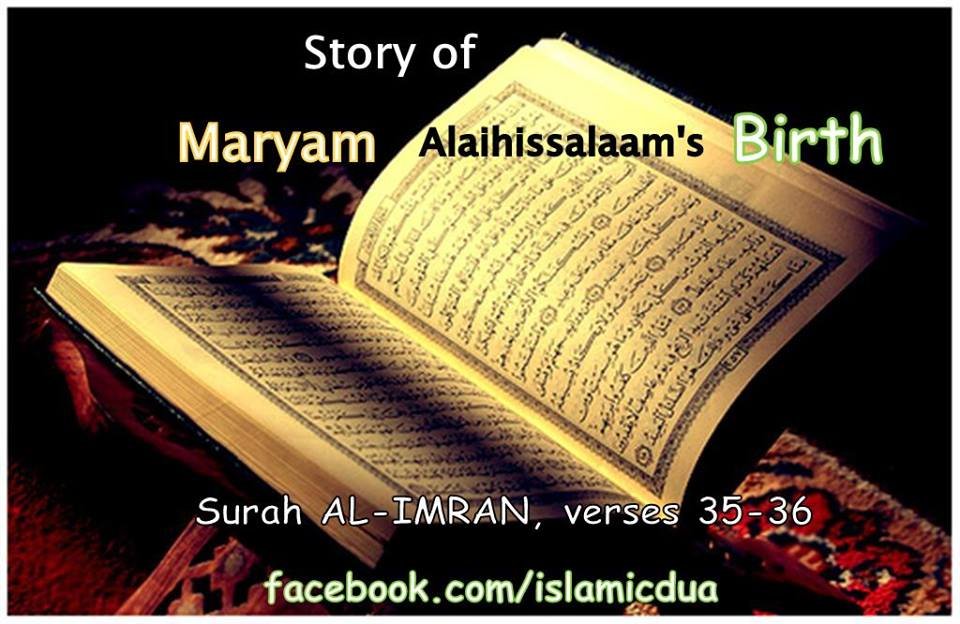
    The Story of Maryam Alaihissalaam’s Birth (Mother of Prophet Issa Alaihissalaam)

    Surah AL-IMRAN, verses 35-36

    (35. (Remember) when the wife of `Imran said: “O my Lord! I have vowed to You what is in my womb to be dedicated for Your services, so accept this from me. Verily, You are the All-Hearer, the All-Knowing.”) (36. Then when she gave birth to her, she said: “O my Lord! I have given birth to a female child, ـ and Allah knew better what she bore, ـ “And the male is not like the female, and I have named her Maryam, and I seek refuge with You for her and for her offspring from Shaytan, the outcast.”)

    The wife of `Imran mentioned here is the mother of Maryam Alaihissalaam, and her name is Hannah bint Faqudh. Muhammad bin Ishaq mentioned that Hannah could not have children and that one day, she saw a bird feeding its chick. She wished she could have children and supplicated to Allah to grant her offspring. Allah accepted her supplication, and when her husband slept with her, she became pregnant. She vowed to make her child concentrate on worship and serving Bayt Al-Maqdis (the Masjid in Jerusalem), when she became aware that she was pregnant.

    She said,
    (O my Lord! I have vowed to You what is in my womb to be dedicated for Your services, so accept this from me. Verily, You are the All-Hearer, the All-Knowing.) meaning, You hear my supplication and You know my intention. She did not know then what she would give birth to, a male or a female.

    (Then when she gave birth to her, she said: “O my Lord! I have given birth to a female child, ـ and Allah knew better what she bore.)

    (And the male is not like the female,) in strength and the commitment to worship Allah and serve the Masjid in Jerusalem.

    (And I have named her Maryam,) thus, testifying to the fact that it is allowed to give a name to the newly born the day it is born, as is apparent from the Ayah, which is also a part of the law of those who were before us.

    Further, the Sunnah of the Messenger of Allah mentioned that the Prophet Sallal laahoo alaihi wassallam said,

    (This night, a son was born for me and I called him by my father’s name, Ibrahim.) Al-Bukhari and Muslim collected this Hadith.

    Allah’s statement that Maryam Alaihissalaam’s mother said,

    (“And I seek refuge with You for her and for her offspring from Shaytan, the outcast.”) means, that she sought refuge with Allah from the evil of Shaytan, for her and her offspring, i.e., `Isa, peace be upon him. Allah accepted her supplication, for `Abdur-Razzaq recorded that Abu Hurayrah (Radi Allahu anhu) said that the Messenger of Allah Sallal laahoo alaihi wassallam said,

    (Every newly born baby is touched by Shaytan when it is born, and the baby starts crying because of this touch, except Maryam and her son.)

    Abu Hurayrah then said, “Read if you will,

    (And I seek refuge with You for her and for her offspring from Shaytan, the outcast).” The Two Sahihs recorded this Hadith.

    Dua from this story to seek Allah’s Protection for your daughter and grandchildren:

    ”And I seek refuge with You (Allah) for her and for her offspring from Shaitan (Satan), the outcast.”

    Wa innee o’eethuhaa bika wathurriyyatahaa minash-shaytaanir-rajeem

    Surah Al- Imran, verse 36

    Click on the link given below to learn a beautiful dua of Prophet Ibrahim Alaihissalaam to have pious children

    https://2learnislam.com/2016/03/10/dua-for-your-children/


  • BE KIND TO your CHILDREN and TREAT THEM EQUALLY

    BE KIND TO your CHILDREN and TREAT THEM EQUALLY

    children

    We should keep the following hadiths in mind when dealing with our children:

    Abu Huraira Radi Allahu anhu reported that al-Aqra’ bin Habis saw Allah’s Apostle (may peace be upon him) kissing Hasan Radi Allahu anhu. He said: I have ten children, but I have never kissed any one of them, whereupon Allah’s Messenger (may peace be upon him) said: He who does not show mercy (towards his children), no mercy would be shown to him.
    Muslim :: Book 30 : Hadith 5736

    The Prophet (peace be upon him) said, “He is not of us who does not have mercy on young children, nor honor the elderly”
    (At-Tirmidhi)

    The Prophet (peace be upon him) said: Act equally between your children; Act equally between your sons.
    Sunan of Abu-Dawood Hadith 3537,Narrated by An-Nu’man ibn Bashir

    ‘A’isha (Allah be pleased with her) reported that there came a few desert Arabs to Allah’s Messenger (may peace be upon him) and said: Do you kiss your children? He said: Yes. Thereupon they said: By Allah but we do not kiss our children. Thereupon Allah’s Messenger (may peace be upon him) said: Then what can I do if Allah has deprived you of mercy? Ibn Numair said: ( has deprived) your heart of mercy.
    Muslim :: Book 30 : Hadith 5735

    The Apostle of Allah (peace be upon him) came to some children who were playing: He greeted them lovingly.
    Sunan of Abu-Dawood Hadith 5183,Narrated by Anas ibn Malik

    Al-Bara’ said, “I saw the Prophet, may Allah bless him and grant him peace, when al-Hasan Radi Allahu anhu was on his shoulder. He was saying, ‘O Allah, I love him, so love him.’”

    I prayed along with Allah’s Messenger (peace be upon him) the first prayer. He then went to his family and I also went along with him when he met some children (on the way). He began to pat the cheeks of each one of them. He also patted my cheek and I experienced a coolness or a fragrance of his hand as if it had been brought out from the scent bag of a perfumer.
    Sahih Muslim Hadith 5758

    Click here to learn a beautiful “Dua to have Pious, Obedient Children”

  • Are you a carrier of the Holy Quran?

    Are you a carrier of the Holy Quran?

    reminder3

    The carriers of the Qur’an are recognized by their nights (standing in prayer) when the people are asleep,

    by their days fasting when the people are feasting,

    by their caution when the people mix [the lawful and the unlawful],

    by their humility when the people are arrogant,

    by their sobriety when the people are frivolous,

    by their weeping when the people are laughing,

    and by their silence when the people chatter.

    Abdullah bin Mas‘ūd


    Click here to learn a beautiful Dua for Guidance, Piety and righteousness

  • “So which of the favors of your Lord would you deny?”

    “So which of the favors of your Lord would you deny?”

    favors

    Don’t deny the favors of Allah Subhaanahu wataa’la.


    Appreciate what you’ve got. Acting contrary to this attracts the calamity of Allah. If you don’t have some things in your life, you should be thankful for all the other blessings that you have.

    Many a times we fixate on just one thing that we don’t have and overlook all the other bounties of Allah. This is one of the traps of shaitan to develop a feeling of ingratitude in us and overwhelm us with sadness and grief.

    BEWARE and always be THANKFUL TO ALLAH .


    Click here to learn a beautiful Dua to thank Allah and to seek Allah’s pleasure, piety and Pious children

  • Do you want Allah to remember you and come close to you?

    Do you want Allah to remember you and come close to you?

    Allah Subhaanahu wataa'la

    The Prophet [Peace be upon him] said, “Allah says: ‘I am just as My slave thinks I am, (i.e. I am able to do for him what he thinks I can do for him)and I am with him if He remembers Me.

    If he remembers Me in himself, I too, remember him in Myself; and if he remembers Me in a group of people, I remember him in a group that is better than they;

    and if he comes one span nearer to Me, I go one cubit nearer to him; and if he comes one cubit nearer to Me, I go a distance of two outstretched arms nearer to him; and if he comes to Me walking, I go to him running.’ “
    Bukhari :: Book 9 :: Volume 93 :: Hadith 502

    Click here to learn a beautiful Dua to gain ALLAH’S LOVE, love of other people and good deeds