Tag: zikar

  • Merits of Surah Al-Fatah

    Merits of Surah Al-Fatah

    The Merit of Surah Al-Fatah

    Imam Ahmad recorded from `Abdullah bin Mughaffal, who said that Allah’s Messenger recited Surah Al-Fath on the (day) of the conquest of Makkah, riding on his she-camel. He recited it in a vibrating and pleasant tone. Mu`awiyah (a subnarrator) added: “Were I not afraid that the people would crowd around me, I would surely try to imitate and produce his recitation.” Both Al-Bukhari and Muslim recorded this Hadith through Shu`bah.

    The Reason behind revealing Surat Al-Fatah

    This honorable Surah was revealed after the Messenger of Allah returned from the area of Al-Hudaybiyyah, during the month of Dhul-Qa`dah, in the sixth year of Hijrah. This is when the idolators prevented him from reaching Al-Masjid Al-Haram to perform the `Umrah he intended. They stopped the Prophet from reaching Makkah at that time, but then were prone to peace negotiations. A peace treaty was conducted stipulating that the Messenger would return this year and then come back for `Umrah the following year. The Messenger agreed. However, some of the Companions disliked these terms, including `Umar bin Al-Khattab.

    After the Prophet slaughtered his sacrificial animals in the area where he was stopped and headed back to Al-Madinah, Allah the Exalted and Most Honored revealed this Surah about what occurred between him and the idolators. Allah declared the Al-Hudaybiyyah peace treaty a manifest victory, because of the benefits peace would carry and the good results that did originate from it. `Abdullah bin Mas`ud and other Companions said, “You consider the conquering of Makkah to be Al-Fath (the victory), while to us, Al-Fath is the treaty conducted at Al-Hلudaybiyyah.” Jabir (bin `Abdullah) said, “We only considered Al-Fath to be the day of Hلudaybiyyah!”

    Al-Bukhari recorded that Al-Bara’ (bin `Azib) said, “You consider Al-Fath to be the conquest of Makkah, which was indeed a victory. However, we consider Al-Fath to be the pledge of Ar-Ridwan on the Day of Al-Hudaybiyyah. Then, we were fourteen hundred with the Messenger of Allah .

    Al-Hudaybiyyah had a well, whose water we consumed, not leaving a drop of water in it. When the news of what happened reached the Messenger of Allah , he came towards us and sat on the edge of the well. Then he asked to be brought a bucket of water and used it for ablution. He next rinsed his mouth, invoked Allah and poured that water into the well. Soon after, that well provided us, as well as our animals, with sufficient water, in whatever amount of water we wished.

    Imam Ahmad recorded that `Umar bin Al-Khattab said, “We were with the Messenger of Allah on a trip, and I asked him about a matter three times, but he did not answer me. So I said to myself, `May your mother lose you, O son of Al-Khattab! You were stubborn in repeating your question three times to the Messenger of Allah ; each time he did not respond to you.’ So I mounted my animal, my camel, and went ahead for fear that a part of the Qur’an might be revealed in my case. Suddenly, I heard a caller calling, `O `Umar!’ So, I went to the Messenger while fearing that part of the Qur’an was revealed about me. The Prophet said,

    (Last night, a Surah was revealed to me that is dearer to me than this life and all that it contains: (Verily, We have given you a manifest victory. That Allah may forgive you your sins of the past and the future.))

    Al-Bukhari, At-Tirmidhi and An-Nasa’i collected this Hadith from several chains of narration through Malik, may Allah grant him His mercy. `Ali bin Al-Madini commented, “This is a good chain of narration consisting of the scholars of Al-Madinah.”

    Imam Ahmad recorded that Anas bin Malik said, “This Ayah was revealed to the Prophet ,

    (That Allah may forgive you your sins of the past and the future,) on his return from Al-Hudaybiyyah. The Prophet said,

    (Tonight, an Ayah, that is dearer to me than all that the earth carries, was revealed to me.) The Prophet recited the Ayah to them. They said, `Congratulations, O Allah’s Messenger! Allah the Exalted and Most Honored has stated what He will do with you. So what will He do with us

    Allah’s statement,

    (Verily, We have given you a manifest victory.) means, clear and apparent victory. This Ayah is about the treaty at Al-Hudaybiyyah, which resulted in great goodness, including people embracing Islam in large crowds and having the chance to meet each other

  • Du’as for Morning and Evening

    Du’as for Morning and Evening

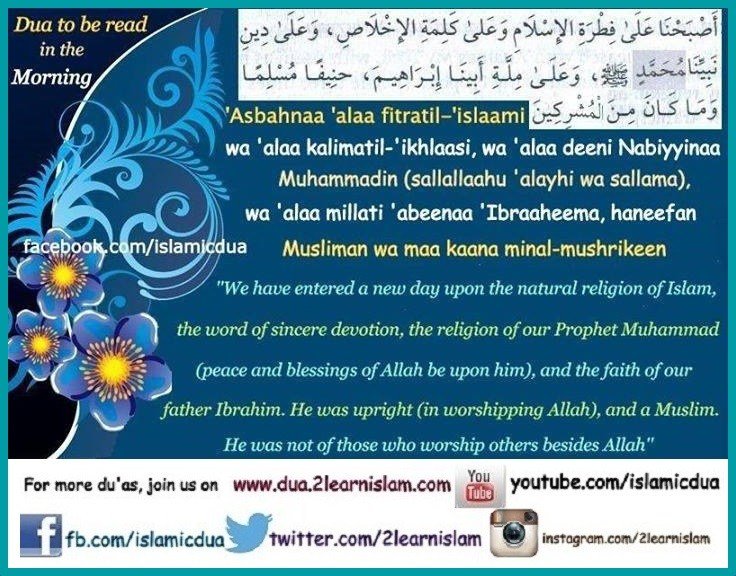
    We have entered a new day1 upon the natural religion of Islam, the word of sincere devotion, the religion of our Prophet Muhammad (peace and blessings of Allah be upon him), and the faith of our father Ibrahim. He was upright (in worshipping Allah), and a Muslim. He was not of those who worship others besides Allah.


    أَصْبَحْنَا عَلَى فِطْرَةِ الْإِسْلَامِ وَعَلَى كَلِمَةِ الْإِخْلَاصِ، وَعَلَى دِينِ نَبِيِّنَا مُحَمَّدٍ صَلَى اللهُ عَلِيهِ وَسَلَّمَ، وَعَلَى مِلَّةِ أَبِينَا إِبْرَاهِيمَ، حَنِيفَاً مُسْلِماً وَمَا كَانَ مِنَ الْمُشْرِكِينَ
     
    ‘Asbahnaa ‘alaa fitratil-‘Islaami wa ‘alaa kalimatil-‘ikhlaasi, wa ‘alaa deeni Nabiyyinaa Muhammadin (sallallaahu ‘alayhi wa sallama), wa ‘alaa millati ‘abeenaa ‘Ibraaheema, haneefan Musliman wa maa kaana minal-mushrikeen
     
    1 When you say this in the evening, you should say: ‘Amsaynaa ‘alaa fitratil-‘Islaam…: “We end this day…” 
     
    Ahmad 3/406-7, 5/123, An-Nasa’i
     

    hoever recites this with conviction in the evening and dies during that night shall enter Paradise, and whoever recites it with conviction in the morning and dies during that day shall enter Paradise.

    Al-Bukhari 7/150. Other reports are in An-Nasa’i and At-Tirmidhi.

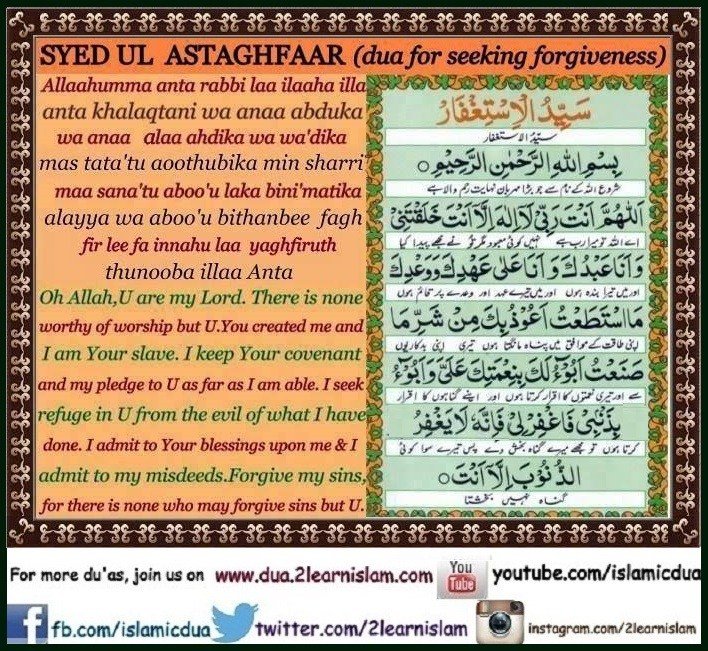
    O Allah, You are my Lord, there is none worthy of worship but You. You created me and I am your slave. I keep Your covenant, and my pledge to You so far as I am able. I seek refuge in You from the evil of what I have done. I admit to Your blessings upon me, and I admit to my misdeeds. Forgive me, for there is none who may forgive sins but You.

    اللَّهُمَّ أَنْتَ رَبِّي لّا إِلَهَ إِلَّا أَنْتَ، خَلَقْتَنِي وَأَنَا عَبْدُكَ، وَأَنَا عَلَى عَهْدِكَ وَوَعْدِكَ مَا اسْتَطَعْتَ، أَعُوذُ بِكَ مِنْ شَرِّ مَا صَنَعْتَ، أَبُوءُ لَكَ بِنِعْمَتِكَ عَلَيَّ، وَأَبُوءُ بِذَنْبِي فَاغْفِر لِي فَإِنَّهُ لَا يَغْفِرُ الذُّنُوبَ إِلَّا أَنْتَ

    Allaahumma ‘Anta Rabbee laa ‘ilaaha ‘illaa ‘Anta, khalaqtanee wa ‘anaa ‘abduka, wa ‘anaa ‘alaa ‘ahdika wa wa’dika mas-tata’tu, ‘a’oothu bika min sharri maa sana’tu, ‘aboo’u laka bini’matika ‘alayya, wa ‘aboo’u bithanbee faghfir lee fa’innahu laa yaghfiruth-thunooba ‘illaa ‘Anta.
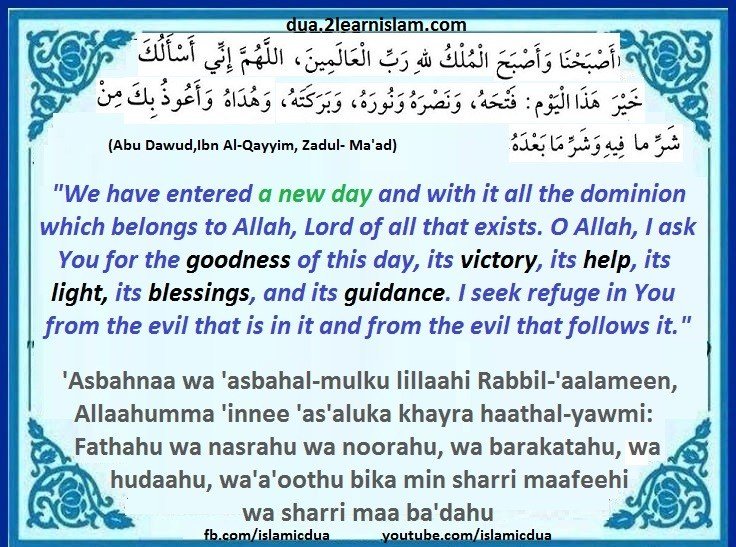
     

    We have entered a new day and with it all the dominion which belongs to Allah, Lord of all that exists. O Allah, I ask You for the goodness of this day, its victory, its help, its light, its blessings, and its guidance. I seek refuge in You from the evil that is in it and from the evil that follows it.

     
    أَصْبَحْنَا وَأَصْبَحَ الْمُلْكُ لهِ رَبِّ الْعَالَمِينَ، اللَّهُمَّ إِنِّي أَسْأَلُكَ خَيْرَ هَذَا الْيَوْمِ فَتْحَهُ، وَنَصْرَهُ وَنُورَهُ، وَبَرَكَتَهُ، وَهُدَاهُ، وَأَعُوذُ بِكَ مِنْ شَرِّ مَا فِيهِ وَشَرِّ مَا بَعْدَهُ
     
    Transliteration
     
    ‘Asbahnaa wa ‘asbahal-mulku lillaahi Rabbil-‘aalameen, Allaahumma ‘innee ‘as’aluka khayra haathal-yawmi: Fathahu wa nasrahu wa noorahu, wa barakatahu, wa hudaahu, wa’a’oothu bika min sharri maafeehi wa sharri maa ba’dahu.
     
     For evening recitation, say here: Allaahumma ‘innee ‘as’aluka khayra haathihil-laylati: “My Lord, I ask You for the good things of this night.” 
     
     Abu Dawud
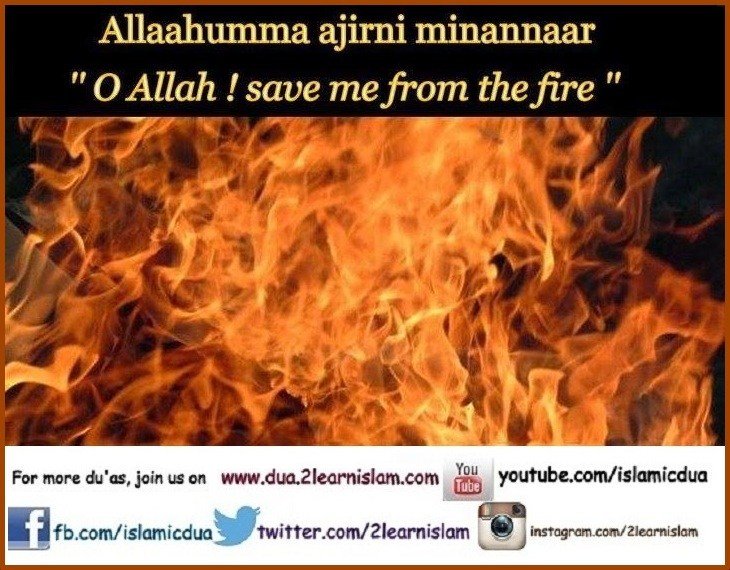
    Recite this 7 times after Fajar and Maghrib salah.

    ”O Allah! Save me from the fire”


    Allahumma ajirni minan-naar
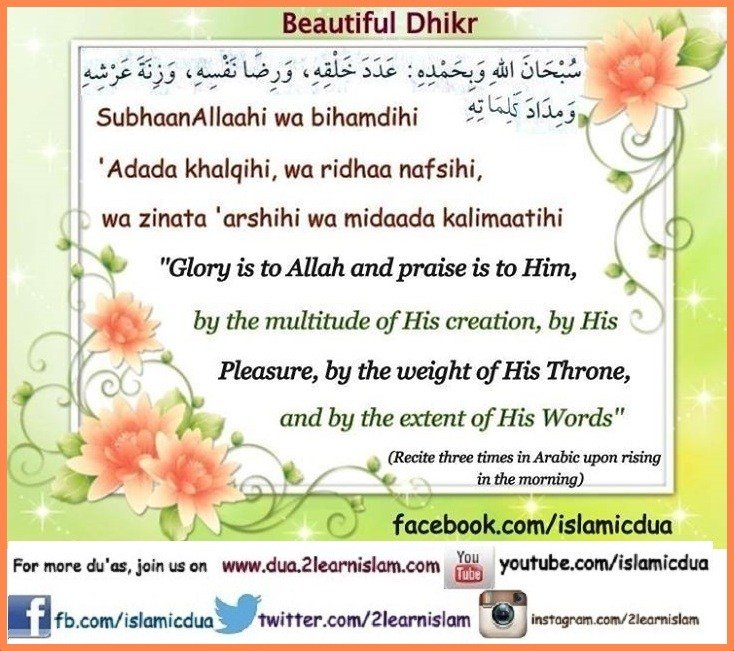
     

    “Glory is to Allah and praise is to Him, by the multitude of His creation, by His Pleasure, by the weight of His Throne, and by the extent of His Words.”(Recite three times in Arabic upon rising in the morning).

    سُبْحَانَ اللهِ وَبِحَمْدِهِ عَدَدَ خَلْقِهِ، وَرِضَا نَفْسِهِ، وَزِنَةَ عَرْشِهِ وَمِدَادَ كَلِمَاتِهِ
     
    Subhaanallaahi wa bihamdihi, ‘Adada khalqihi, wa ridhaa nafsihi, wa zinata ‘arshihi wa midaada kalimaatihi.
     
     
    Muslim 4/2090
     

    “Whoever recites this one hundred times in the morning and in the evening will not be surpassed on the Day of Resurrection by anyone having done better than this except for someone who had recited it more. ”

    Al-Bukhari 4/2071

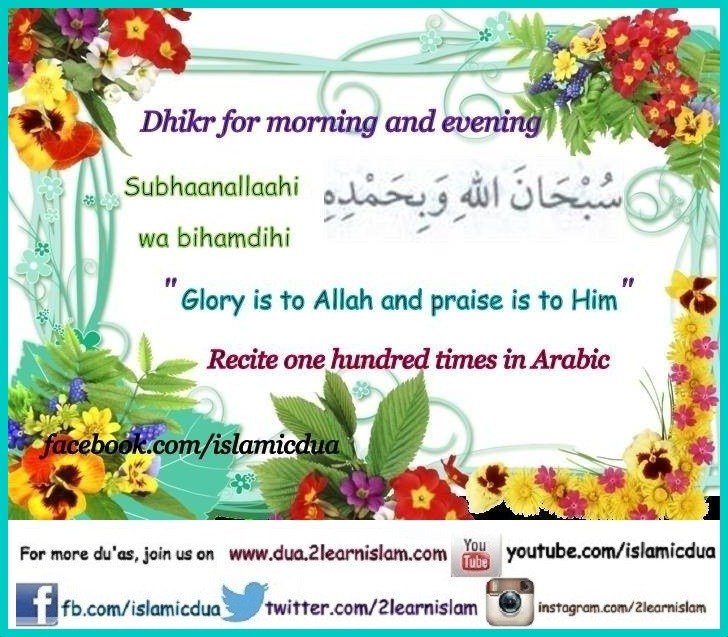
    “Glory is to Allah and praise is to Him”

    (Recite one hundred times in Arabic)

    سُبْحَانَ اللهِ وَبِحَمْدِهِ
     
    Subhaanallaahi wa bihamdihi
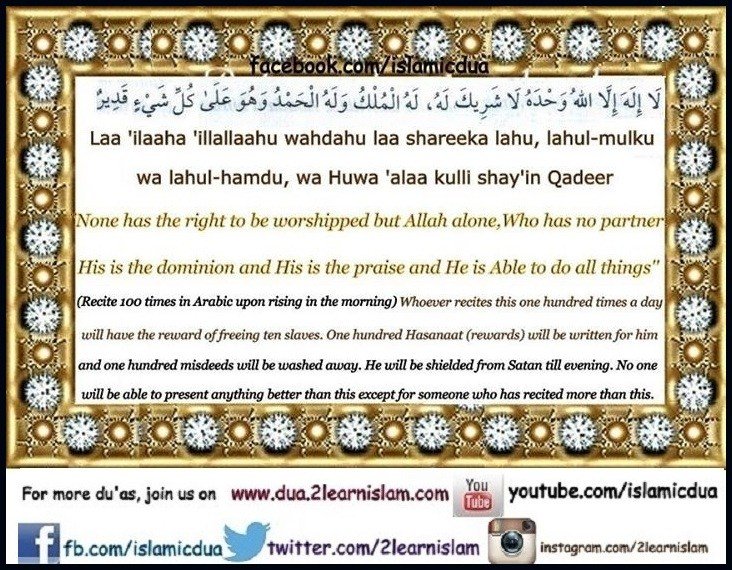
    “None has the right to be worshipped but Allah alone, Who has no partner. His is the dominion and His is the praise and He is Able to do all things”

    Recite ten times in Arabic or one time to ward off laziness

    لَا إِلَهَ إِلَّا اللهُ وَحْدَهُ لَا شَرِيكَ لَهُ، لَهُ الْمُلْكُ وَلَهُ الْحَمْدُ، وَهُوَ عَلَى كُلِّ شَيْءٍ قَدِيرٌ

    Laa ‘ilaaha ‘illallaahu wahdahu laa shareeka lahu, lahul-mulku wa lahul-hamdu, wa Huwa ‘alaa kulli shay’in Qadeer


    Allah will write ten Hasanaat (rewards) for whoever recites this ten times in the morning, and forgive him ten misdeeds and give him the reward of freeing ten slaves and protect him from Satan.


    Whoever recites this ten times in the evening will get this same reward.

    An-Nasa’i, ‘Amalul-Yawm wal-Laylah (no. 24). Its chain of transmission is sound (Sahih). Albani 1/272.

    Abu Hurayrah narrated that the Prophet (Peace be upon him) said: “Allah will write one hundred Hasanat for whoever says There is no God but Allah alone, He has no partner. To Allah is possession of everything, and to Him all praise is. He is Capable of all things’ ten times in the morning, and forgive him one hundred misdeeds. He will have the reward of freeing a slave and will be protected from Satan throughout the day unto dusk. Whoever says it in the evening will have the same reward.”

    Ahmad 8/704, 16/293. Its chain of transmission is good (Hasan).

    Whoever recites this in the morning, will have the reward of freeing a slave from the Children of Isma’il. Ten Hasanaat (rewards) will be written for him, and he will be forgiven ten misdeeds, raised up ten degrees, and be protected from Satan until evening. Whoever says it in the evening will have the same reward until morning.

    Abu Dawud 4/319, 3/957, Ahmad 4/ 60, Ibn Majah
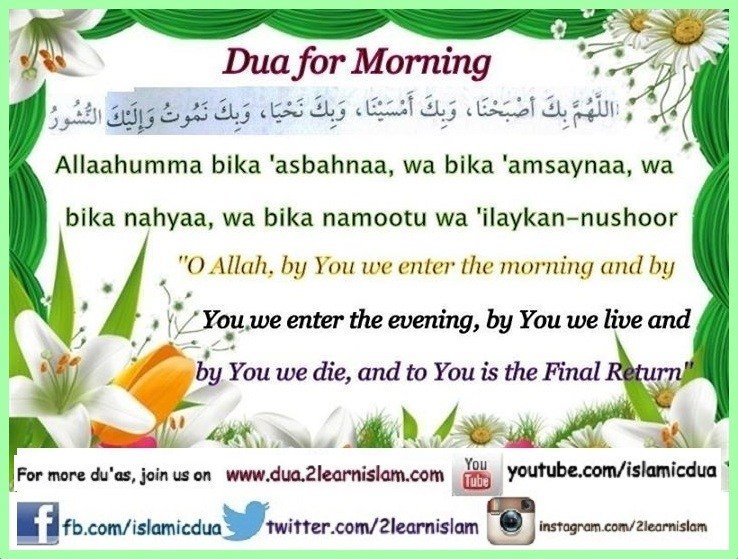
     

    ”O Allah, by You we enter the morning and by You we enter the evening, 1 by You we live and by You we die, and to You is the Final Return”

    اللَّهُمَّ بِكَ أَصْبَحْنَا، وَبِكَ أَمْسَيْنَا، وَبِكَ نَحْيَا، وَبِكَ نَمُوتُ وَإِلَيْكَ النُّشُورُ

    Allaahumma bika ‘asbahnaa, wa bika ‘amsaynaa, wa bika nahyaa, wa bika namootu wa ‘ilaykan-nushoor

    When you say this in the evening you should say: Allaahumma bika ‘amsaynaa wa bika ‘asbahnaa, wa bika nahyaa, wa bika namoot, wa ‘ilaykal-maseer : “O Allah, You bring us the end of the day as You bring us its beginning, You bring us life and you bring us death, and to You is our fate.”

    Sahih At-Tirmidhi 3/142.
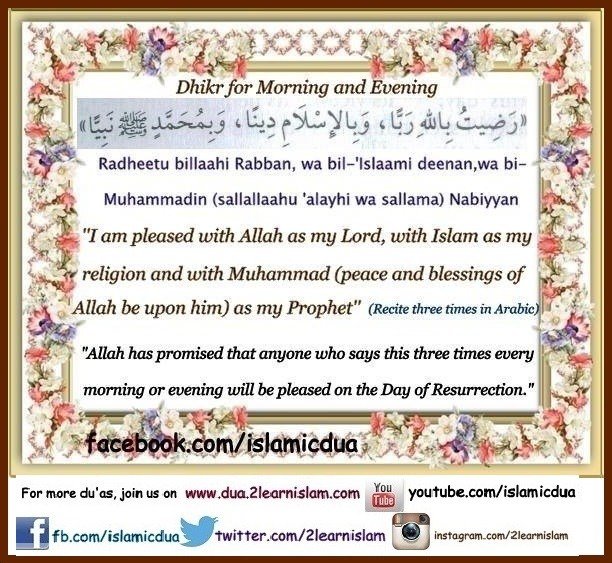
    “Allah has promised that anyone who says this three times every morning or evening will be pleased on the Day of Resurrection.”

    “I am pleased with Allah as my Lord, with Islam as my religion and with Muhammad (peace and blessings of Allah be upon him) as my Prophet.”

    (Recite three times in Arabic).

    رَضِيتُ باللهِ رَبَّاً، وَبِالْإِسْلَامِ دِيناً، وَبِمُحَمَّدٍ صَلَى اللهُ عَلِيهِ وَسَلَّمَ نَبِيَّاً

    Radheetu billaahi Rabban, wa bil-‘Islaami deenan, wa bi-Muhammadin (sallallaahu ‘alayhi wa sallama) Nabiyyan.
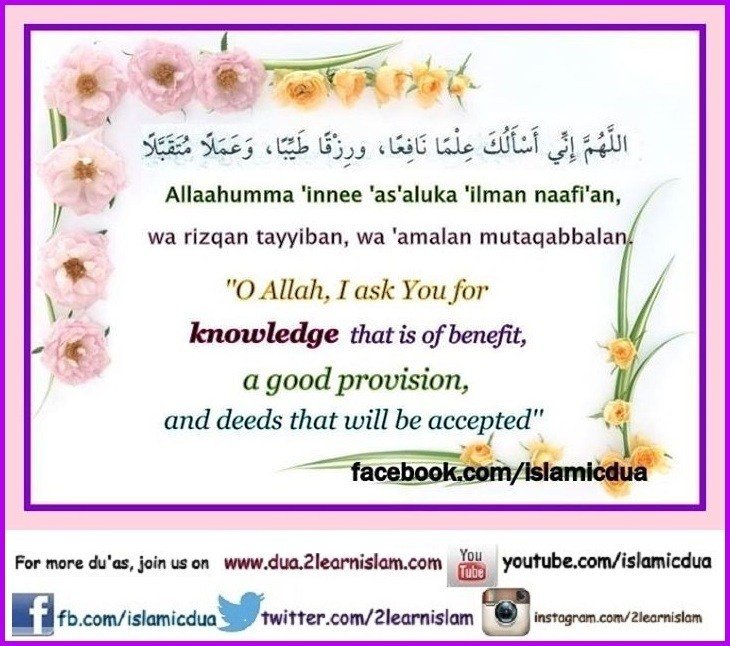
    “O Allah, I ask You for KNOWLEDGE that is of benefit, a good PROVISION, and DEEDS that will be accepted”

    اللَّهُمَّ إنِّي أَسْأَلُكَ عِلْماً نَافِعاً، وَرِزقاً طَيِّباً، وَعَمَلاً مُتَقَبَّلاً

    Allaahumma ‘innee ‘as’aluka ‘ilman naafi’an, wa rizqan tayyiban, wa ‘amalan mutaqabbalan.

    Recite 3 times upon waking up in the morning.

    Ayat-ul-Kursi (The Greatest Ayah in the Holy Quran)
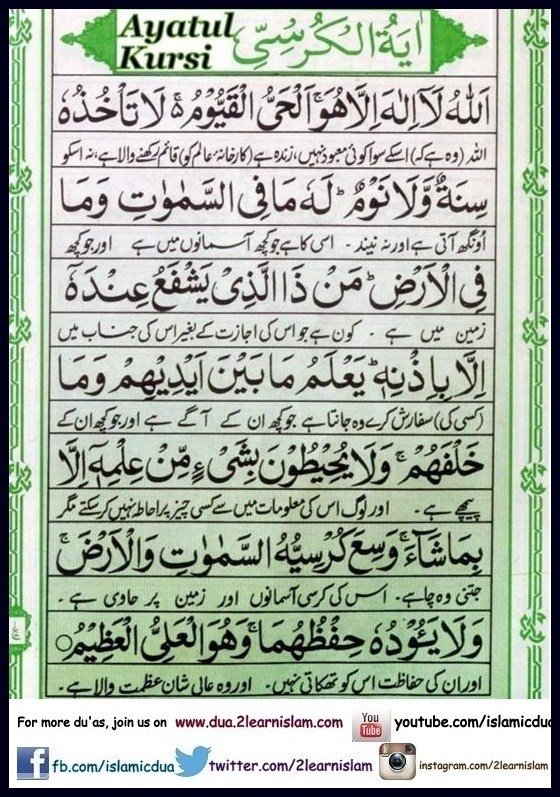
    Allah – there is no deity except Him, the Ever-Living, the Sustainer of [all] existence. Neither drowsiness overtakes Him nor sleep. To Him belongs whatever is in the heavens and whatever is on the earth. Who is it that can intercede with Him except by His permission? He knows what is [presently] before them and what will be after them, and they encompass not a thing of His knowledge except for what He wills. His Kursi extends over the heavens and the earth, and their preservation tires Him not. And He is the Most High, the Most Great.  

    اللَّهُ لَآ إِلَـٰهَ إِلَّا هُوَ الْحَيُّ الْقَيُّومُ ۚ لَا تَأْخُذُهُ سِنَةٌ وَلَا نَوْمٌ ۚ لَّهُ مَا فِي ٱلسَّمَـٰوَ‌ٰتِ وَمَا فِي الْأَرْضِ ۗ مَن ذَا الَّذِي يَشْفَعُ عِندَهُ إِلَّا بِإِذْنِهِ ۚ يَعْلَمُ مَا بَيْنَ أَيْدِيهِمْ وَمَا خَلْفَهُمْ ۖ وَلَا يُحِيطُونَ بِشَيْءٍ مِّنْ عِلْمِهِ إِلَّا بِمَا شَآءَ ۚ وَسِعَ كُرْسِيُّهُ ٱلسَّمَـٰوَ‌ٰتِ وَالْأَرْضَ ۖ وَلَا يَئُودُهُ حِفْظُهُمَا ۚ وَهُوَ الْعَلِيُّ الْعَظِيمُ


    Allaahu laa ‘ilaaha ‘illaa Huwal-Hayyul-Qayyoom, laa ta’khuthuhu sinatun wa laa nawm, lahu maa fis-samaawaati wa maa fil-‘ardh, man thal-lathee yashfa’u ‘indahu ‘illaa bi’ithnih, ya’lamu maa bayna ‘aydeehim wa maa khalfahum, wa laa yuheetoona bishay’im-min ‘ilmihi ‘illaa bimaa shaa’a, wasi’a kursiyyuhus-samaawaati wal’ardh, wa laa ya’ooduhu hifdhuhumaa, wa Huwal- ‘Aliyyul- ‘Adheem.

    Surah Al-Baqarah, verse 255


    Whoever says this when he rises in the morning will be protected from jinns until he retires in the evening, and whoever says it when retiring in the evening will be protected from them until he rises in the morning.
     

  • Du’as for Morning and Evening

    Du’as for Morning and Evening

    We have entered a new day1 upon the natural religion of Islam, the word of sincere devotion, the religion of our Prophet Muhammad (peace and blessings of Allah be upon him), and the faith of our father Ibrahim. He was upright (in worshipping Allah), and a Muslim. He was not of those who worship others besides Allah.


    أَصْبَحْنَا عَلَى فِطْرَةِ الْإِسْلَامِ وَعَلَى كَلِمَةِ الْإِخْلَاصِ، وَعَلَى دِينِ نَبِيِّنَا مُحَمَّدٍ صَلَى اللهُ عَلِيهِ وَسَلَّمَ، وَعَلَى مِلَّةِ أَبِينَا إِبْرَاهِيمَ، حَنِيفَاً مُسْلِماً وَمَا كَانَ مِنَ الْمُشْرِكِينَ
     
    ‘Asbahnaa ‘alaa fitratil-‘Islaami wa ‘alaa kalimatil-‘ikhlaasi, wa ‘alaa deeni Nabiyyinaa Muhammadin (sallallaahu ‘alayhi wa sallama), wa ‘alaa millati ‘abeenaa ‘Ibraaheema, haneefan Musliman wa maa kaana minal-mushrikeen
     
    1 When you say this in the evening, you should say: ‘Amsaynaa ‘alaa fitratil-‘Islaam…: “We end this day…” 
     
    Ahmad 3/406-7, 5/123, An-Nasa’i


    hoever recites this with conviction in the evening and dies during that night shall enter Paradise, and whoever recites it with conviction in the morning and dies during that day shall enter Paradise.

    Al-Bukhari 7/150. Other reports are in An-Nasa’i and At-Tirmidhi.

    O Allah, You are my Lord, there is none worthy of worship but You. You created me and I am your slave. I keep Your covenant, and my pledge to You so far as I am able. I seek refuge in You from the evil of what I have done. I admit to Your blessings upon me, and I admit to my misdeeds. Forgive me, for there is none who may forgive sins but You.

    اللَّهُمَّ أَنْتَ رَبِّي لّا إِلَهَ إِلَّا أَنْتَ، خَلَقْتَنِي وَأَنَا عَبْدُكَ، وَأَنَا عَلَى عَهْدِكَ وَوَعْدِكَ مَا اسْتَطَعْتَ، أَعُوذُ بِكَ مِنْ شَرِّ مَا صَنَعْتَ، أَبُوءُ لَكَ بِنِعْمَتِكَ عَلَيَّ، وَأَبُوءُ بِذَنْبِي فَاغْفِر لِي فَإِنَّهُ لَا يَغْفِرُ الذُّنُوبَ إِلَّا أَنْتَ

    Allaahumma ‘Anta Rabbee laa ‘ilaaha ‘illaa ‘Anta, khalaqtanee wa ‘anaa ‘abduka, wa ‘anaa ‘alaa ‘ahdika wa wa’dika mas-tata’tu, ‘a’oothu bika min sharri maa sana’tu, ‘aboo’u laka bini’matika ‘alayya, wa ‘aboo’u bithanbee faghfir lee fa’innahu laa yaghfiruth-thunooba ‘illaa ‘Anta.


    We have entered a new day and with it all the dominion which belongs to Allah, Lord of all that exists. O Allah, I ask You for the goodness of this day, its victory, its help, its light, its blessings, and its guidance. I seek refuge in You from the evil that is in it and from the evil that follows it.

     
    أَصْبَحْنَا وَأَصْبَحَ الْمُلْكُ لهِ رَبِّ الْعَالَمِينَ، اللَّهُمَّ إِنِّي أَسْأَلُكَ خَيْرَ هَذَا الْيَوْمِ فَتْحَهُ، وَنَصْرَهُ وَنُورَهُ، وَبَرَكَتَهُ، وَهُدَاهُ، وَأَعُوذُ بِكَ مِنْ شَرِّ مَا فِيهِ وَشَرِّ مَا بَعْدَهُ
     
    Transliteration
     
    ‘Asbahnaa wa ‘asbahal-mulku lillaahi Rabbil-‘aalameen, Allaahumma ‘innee ‘as’aluka khayra haathal-yawmi: Fathahu wa nasrahu wa noorahu, wa barakatahu, wa hudaahu, wa’a’oothu bika min sharri maafeehi wa sharri maa ba’dahu.
     
     For evening recitation, say here: Allaahumma ‘innee ‘as’aluka khayra haathihil-laylati: “My Lord, I ask You for the good things of this night.” 
     
     Abu Dawud

    Recite this 7 times after Fajar and Maghrib salah.

    ”O Allah! Save me from the fire”


    Allahumma ajirni minan-naar


    “Glory is to Allah and praise is to Him, by the multitude of His creation, by His Pleasure, by the weight of His Throne, and by the extent of His Words.”(Recite three times in Arabic upon rising in the morning).

    سُبْحَانَ اللهِ وَبِحَمْدِهِ عَدَدَ خَلْقِهِ، وَرِضَا نَفْسِهِ، وَزِنَةَ عَرْشِهِ وَمِدَادَ كَلِمَاتِهِ
     
    Subhaanallaahi wa bihamdihi, ‘Adada khalqihi, wa ridhaa nafsihi, wa zinata ‘arshihi wa midaada kalimaatihi.
     
     
    Muslim 4/2090


    “Whoever recites this one hundred times in the morning and in the evening will not be surpassed on the Day of Resurrection by anyone having done better than this except for someone who had recited it more. ”

    Al-Bukhari 4/2071

    “Glory is to Allah and praise is to Him”

    (Recite one hundred times in Arabic)

    سُبْحَانَ اللهِ وَبِحَمْدِهِ
     
    Subhaanallaahi wa bihamdihi

    “None has the right to be worshipped but Allah alone, Who has no partner. His is the dominion and His is the praise and He is Able to do all things”

    Recite ten times in Arabic or one time to ward off laziness

    لَا إِلَهَ إِلَّا اللهُ وَحْدَهُ لَا شَرِيكَ لَهُ، لَهُ الْمُلْكُ وَلَهُ الْحَمْدُ، وَهُوَ عَلَى كُلِّ شَيْءٍ قَدِيرٌ

    Laa ‘ilaaha ‘illallaahu wahdahu laa shareeka lahu, lahul-mulku wa lahul-hamdu, wa Huwa ‘alaa kulli shay’in Qadeer


    Allah will write ten Hasanaat (rewards) for whoever recites this ten times in the morning, and forgive him ten misdeeds and give him the reward of freeing ten slaves and protect him from Satan.


    Whoever recites this ten times in the evening will get this same reward.

    An-Nasa’i, ‘Amalul-Yawm wal-Laylah (no. 24). Its chain of transmission is sound (Sahih). Albani 1/272.

    Abu Hurayrah narrated that the Prophet (Peace be upon him) said: “Allah will write one hundred Hasanat for whoever says There is no God but Allah alone, He has no partner. To Allah is possession of everything, and to Him all praise is. He is Capable of all things’ ten times in the morning, and forgive him one hundred misdeeds. He will have the reward of freeing a slave and will be protected from Satan throughout the day unto dusk. Whoever says it in the evening will have the same reward.”

    Ahmad 8/704, 16/293. Its chain of transmission is good (Hasan).

    Whoever recites this in the morning, will have the reward of freeing a slave from the Children of Isma’il. Ten Hasanaat (rewards) will be written for him, and he will be forgiven ten misdeeds, raised up ten degrees, and be protected from Satan until evening. Whoever says it in the evening will have the same reward until morning.

    Abu Dawud 4/319, 3/957, Ahmad 4/ 60, Ibn Majah


    ”O Allah, by You we enter the morning and by You we enter the evening, 1 by You we live and by You we die, and to You is the Final Return”

    اللَّهُمَّ بِكَ أَصْبَحْنَا، وَبِكَ أَمْسَيْنَا، وَبِكَ نَحْيَا، وَبِكَ نَمُوتُ وَإِلَيْكَ النُّشُورُ

    Allaahumma bika ‘asbahnaa, wa bika ‘amsaynaa, wa bika nahyaa, wa bika namootu wa ‘ilaykan-nushoor

    When you say this in the evening you should say: Allaahumma bika ‘amsaynaa wa bika ‘asbahnaa, wa bika nahyaa, wa bika namoot, wa ‘ilaykal-maseer : “O Allah, You bring us the end of the day as You bring us its beginning, You bring us life and you bring us death, and to You is our fate.”

    Sahih At-Tirmidhi 3/142.

    “Allah has promised that anyone who says this three times every morning or evening will be pleased on the Day of Resurrection.”

    “I am pleased with Allah as my Lord, with Islam as my religion and with Muhammad (peace and blessings of Allah be upon him) as my Prophet.”

    (Recite three times in Arabic).

    رَضِيتُ باللهِ رَبَّاً، وَبِالْإِسْلَامِ دِيناً، وَبِمُحَمَّدٍ صَلَى اللهُ عَلِيهِ وَسَلَّمَ نَبِيَّاً

    Radheetu billaahi Rabban, wa bil-‘Islaami deenan, wa bi-Muhammadin (sallallaahu ‘alayhi wa sallama) Nabiyyan.

    “O Allah, I ask You for KNOWLEDGE that is of benefit, a good PROVISION, and DEEDS that will be accepted”

    اللَّهُمَّ إنِّي أَسْأَلُكَ عِلْماً نَافِعاً، وَرِزقاً طَيِّباً، وَعَمَلاً مُتَقَبَّلاً

    Allaahumma ‘innee ‘as’aluka ‘ilman naafi’an, wa rizqan tayyiban, wa ‘amalan mutaqabbalan.

    Recite 3 times upon waking up in the morning.

    Ayat-ul-Kursi (The Greatest Ayah in the Holy Quran)

    Allah – there is no deity except Him, the Ever-Living, the Sustainer of [all] existence. Neither drowsiness overtakes Him nor sleep. To Him belongs whatever is in the heavens and whatever is on the earth. Who is it that can intercede with Him except by His permission? He knows what is [presently] before them and what will be after them, and they encompass not a thing of His knowledge except for what He wills. His Kursi extends over the heavens and the earth, and their preservation tires Him not. And He is the Most High, the Most Great.  

    اللَّهُ لَآ إِلَـٰهَ إِلَّا هُوَ الْحَيُّ الْقَيُّومُ ۚ لَا تَأْخُذُهُ سِنَةٌ وَلَا نَوْمٌ ۚ لَّهُ مَا فِي ٱلسَّمَـٰوَ‌ٰتِ وَمَا فِي الْأَرْضِ ۗ مَن ذَا الَّذِي يَشْفَعُ عِندَهُ إِلَّا بِإِذْنِهِ ۚ يَعْلَمُ مَا بَيْنَ أَيْدِيهِمْ وَمَا خَلْفَهُمْ ۖ وَلَا يُحِيطُونَ بِشَيْءٍ مِّنْ عِلْمِهِ إِلَّا بِمَا شَآءَ ۚ وَسِعَ كُرْسِيُّهُ ٱلسَّمَـٰوَ‌ٰتِ وَالْأَرْضَ ۖ وَلَا يَئُودُهُ حِفْظُهُمَا ۚ وَهُوَ الْعَلِيُّ الْعَظِيمُ


    Allaahu laa ‘ilaaha ‘illaa Huwal-Hayyul-Qayyoom, laa ta’khuthuhu sinatun wa laa nawm, lahu maa fis-samaawaati wa maa fil-‘ardh, man thal-lathee yashfa’u ‘indahu ‘illaa bi’ithnih, ya’lamu maa bayna ‘aydeehim wa maa khalfahum, wa laa yuheetoona bishay’im-min ‘ilmihi ‘illaa bimaa shaa’a, wasi’a kursiyyuhus-samaawaati wal’ardh, wa laa ya’ooduhu hifdhuhumaa, wa Huwal- ‘Aliyyul- ‘Adheem.

    Surah Al-Baqarah, verse 255


    Whoever says this when he rises in the morning will be protected from jinns until he retires in the evening, and whoever says it when retiring in the evening will be protected from them until he rises in the morning.