Tag: salat

  • Merits of Surah Al-Fatah

    Merits of Surah Al-Fatah

    The Merit of Surah Al-Fatah

    Imam Ahmad recorded from `Abdullah bin Mughaffal, who said that Allah’s Messenger recited Surah Al-Fath on the (day) of the conquest of Makkah, riding on his she-camel. He recited it in a vibrating and pleasant tone. Mu`awiyah (a subnarrator) added: “Were I not afraid that the people would crowd around me, I would surely try to imitate and produce his recitation.” Both Al-Bukhari and Muslim recorded this Hadith through Shu`bah.

    The Reason behind revealing Surat Al-Fatah

    This honorable Surah was revealed after the Messenger of Allah returned from the area of Al-Hudaybiyyah, during the month of Dhul-Qa`dah, in the sixth year of Hijrah. This is when the idolators prevented him from reaching Al-Masjid Al-Haram to perform the `Umrah he intended. They stopped the Prophet from reaching Makkah at that time, but then were prone to peace negotiations. A peace treaty was conducted stipulating that the Messenger would return this year and then come back for `Umrah the following year. The Messenger agreed. However, some of the Companions disliked these terms, including `Umar bin Al-Khattab.

    After the Prophet slaughtered his sacrificial animals in the area where he was stopped and headed back to Al-Madinah, Allah the Exalted and Most Honored revealed this Surah about what occurred between him and the idolators. Allah declared the Al-Hudaybiyyah peace treaty a manifest victory, because of the benefits peace would carry and the good results that did originate from it. `Abdullah bin Mas`ud and other Companions said, “You consider the conquering of Makkah to be Al-Fath (the victory), while to us, Al-Fath is the treaty conducted at Al-Hلudaybiyyah.” Jabir (bin `Abdullah) said, “We only considered Al-Fath to be the day of Hلudaybiyyah!”

    Al-Bukhari recorded that Al-Bara’ (bin `Azib) said, “You consider Al-Fath to be the conquest of Makkah, which was indeed a victory. However, we consider Al-Fath to be the pledge of Ar-Ridwan on the Day of Al-Hudaybiyyah. Then, we were fourteen hundred with the Messenger of Allah .

    Al-Hudaybiyyah had a well, whose water we consumed, not leaving a drop of water in it. When the news of what happened reached the Messenger of Allah , he came towards us and sat on the edge of the well. Then he asked to be brought a bucket of water and used it for ablution. He next rinsed his mouth, invoked Allah and poured that water into the well. Soon after, that well provided us, as well as our animals, with sufficient water, in whatever amount of water we wished.

    Imam Ahmad recorded that `Umar bin Al-Khattab said, “We were with the Messenger of Allah on a trip, and I asked him about a matter three times, but he did not answer me. So I said to myself, `May your mother lose you, O son of Al-Khattab! You were stubborn in repeating your question three times to the Messenger of Allah ; each time he did not respond to you.’ So I mounted my animal, my camel, and went ahead for fear that a part of the Qur’an might be revealed in my case. Suddenly, I heard a caller calling, `O `Umar!’ So, I went to the Messenger while fearing that part of the Qur’an was revealed about me. The Prophet said,

    (Last night, a Surah was revealed to me that is dearer to me than this life and all that it contains: (Verily, We have given you a manifest victory. That Allah may forgive you your sins of the past and the future.))

    Al-Bukhari, At-Tirmidhi and An-Nasa’i collected this Hadith from several chains of narration through Malik, may Allah grant him His mercy. `Ali bin Al-Madini commented, “This is a good chain of narration consisting of the scholars of Al-Madinah.”

    Imam Ahmad recorded that Anas bin Malik said, “This Ayah was revealed to the Prophet ,

    (That Allah may forgive you your sins of the past and the future,) on his return from Al-Hudaybiyyah. The Prophet said,

    (Tonight, an Ayah, that is dearer to me than all that the earth carries, was revealed to me.) The Prophet recited the Ayah to them. They said, `Congratulations, O Allah’s Messenger! Allah the Exalted and Most Honored has stated what He will do with you. So what will He do with us

    Allah’s statement,

    (Verily, We have given you a manifest victory.) means, clear and apparent victory. This Ayah is about the treaty at Al-Hudaybiyyah, which resulted in great goodness, including people embracing Islam in large crowds and having the chance to meet each other

  • Duaas after completing the prayer

    Duaas after completing the prayer


    Recite this after you complete your salah.

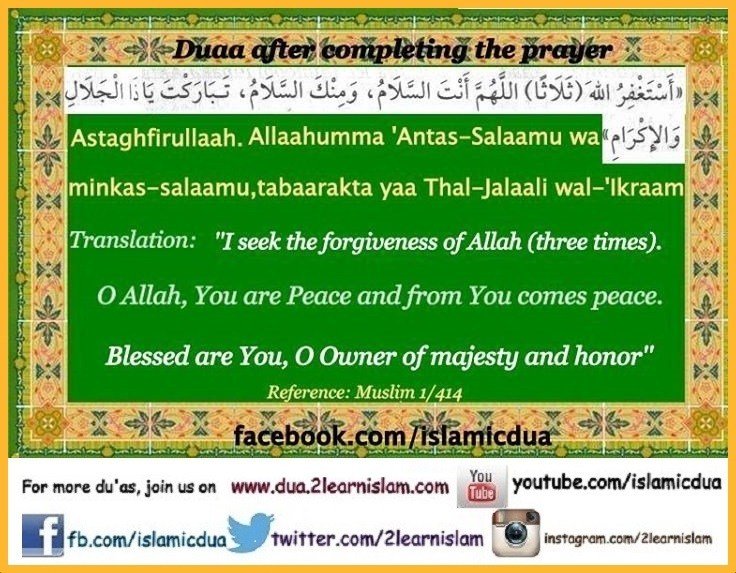
    ”I seek the forgiveness of Allah (three times). O Allah, You are Peace and from You comes peace. Blessed are You, O Owner of majesty and honor.”

    أَسْتَغْفِرُ اللهَ اللَّهُمَّ أَنْتَ السَّلَامُ وَمِنْكَ السَّلَامُ، تَبَارَكْتَ يَا ذَا الْجَلَالِ وَالْإِكْرَامِ


    ‘Astaghfirullaaha Allaahumma ‘Antas-Salaamu wa minkas-salaamu, tabaarakta yaa Thal-Jalaali wal-‘Ikraam.

    Muslim 1/414.

    Click here for the “DUA BOOK” having 120 Beautiful Du’as from the Holy Quran.

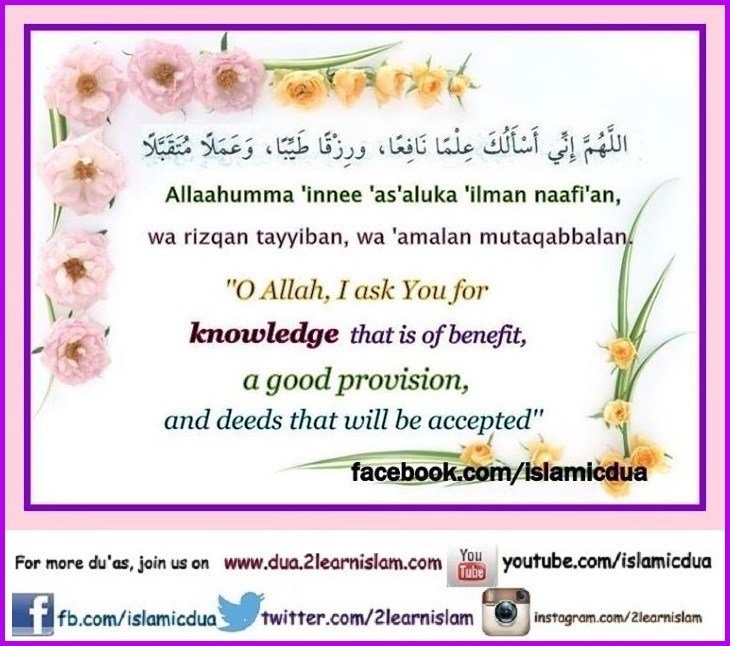
    “O Allah, I ask You for KNOWLEDGE that is of benefit, a good PROVISION, and DEEDS that will be accepted”

    اللَّهُمَّ إنِّي أَسْأَلُكَ عِلْماً نَافِعاً، وَرِزقاً طَيِّباً، وَعَمَلاً مُتَقَبَّلاً

    Allaahumma ‘innee ‘as’aluka ‘ilman naafi’an, wa rizqan tayyiban, wa ‘amalan mutaqabbalan.

    Ibn As-Sunni, no. 54, Ibn Majah no. 925. Its chain of transmission is good (Hasan), Ibn Al-Qayyim 2/375.

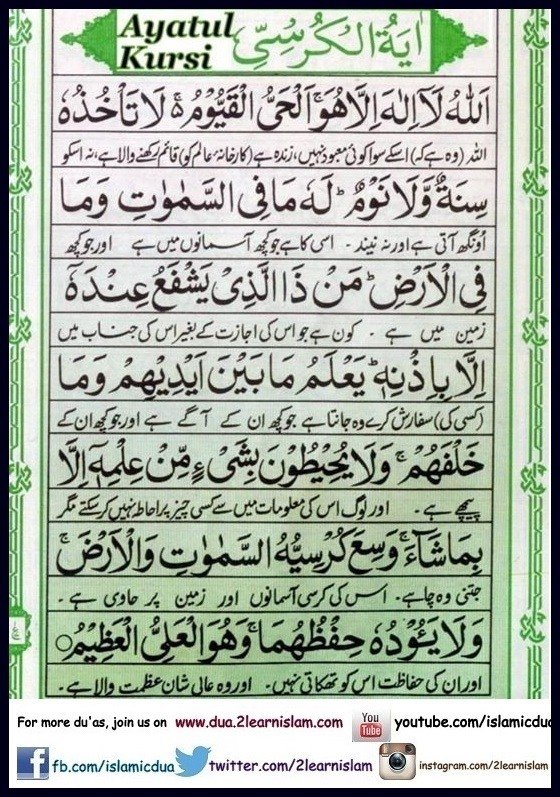
    Allah – there is no deity except Him, the Ever-Living, the Sustainer of [all] existence. Neither drowsiness overtakes Him nor sleep. To Him belongs whatever is in the heavens and whatever is on the earth. Who is it that can intercede with Him except by His permission? He knows what is [presently] before them and what will be after them, and they encompass not a thing of His knowledge except for what He wills. His Kursi extends over the heavens and the earth, and their preservation tires Him not. And He is the Most High, the Most Great.  

    اللَّهُ لَآ إِلَـٰهَ إِلَّا هُوَ الْحَيُّ الْقَيُّومُ ۚ لَا تَأْخُذُهُ سِنَةٌ وَلَا نَوْمٌ ۚ لَّهُ مَا فِي ٱلسَّمَـٰوَ‌ٰتِ وَمَا فِي الْأَرْضِ ۗ مَن ذَا الَّذِي يَشْفَعُ عِندَهُ إِلَّا بِإِذْنِهِ ۚ يَعْلَمُ مَا بَيْنَ أَيْدِيهِمْ وَمَا خَلْفَهُمْ ۖ وَلَا يُحِيطُونَ بِشَيْءٍ مِّنْ عِلْمِهِ إِلَّا بِمَا شَآءَ ۚ وَسِعَ كُرْسِيُّهُ ٱلسَّمَـٰوَ‌ٰتِ وَالْأَرْضَ ۖ وَلَا يَئُودُهُ حِفْظُهُمَا ۚ وَهُوَ الْعَلِيُّ الْعَظِيمُ


    Allaahu laa ‘ilaaha ‘illaa Huwal-Hayyul-Qayyoom, laa ta’khuthuhu sinatun wa laa nawm, lahu maa fis-samaawaati wa maa fil-‘ardh, man thal-lathee yashfa’u ‘indahu ‘illaa bi’ithnih, ya’lamu maa bayna ‘aydeehim wa maa khalfahum, wa laa yuheetoona bishay’im-min ‘ilmihi ‘illaa bimaa shaa’a, wasi’a kursiyyuhus-samaawaati wal’ardh, wa laa ya’ooduhu hifdhuhumaa, wa Huwal- ‘Aliyyul- ‘Adheem.

    Surah Al-Baqarah

  • Duaas after the final Tashahhud and before ending the prayer

    Duaas after the final Tashahhud and before ending the prayer

    Read these duas after the final Tashahhud and before ending the prayer.

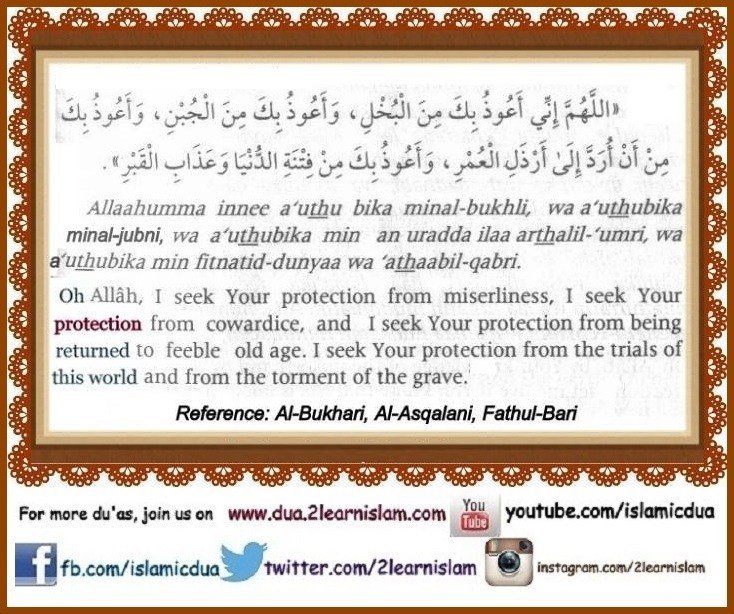
    O Allah, I seek Your protection from miserliness, I seek Your protection from cowardice, and I seek Your protection from being returned to feeble old age.
    I seek Your protection from the trials of this world and from the torment of the grave.
     
    اللَّهُمَّ إِنِّي أَعُوذُ بِكَ مِنَ الْبُخْلِ، وَأَعُوذُ بِكَ مِنَ الْجُبْنِ، وَأَعُوذُ بِكَ مِنْ أَنْ أُرَدَّ إِلَى أَرْذَلِ الْعُمُرِ، وَأَعُوذُ بِكَ مِنْ فِتْنَةِ الدُّنْيَا وَعَذَابِ الْقَبْرِ
     
    Allaahumma ‘innee ‘a’oothu bika minal-bukhli, wa ‘a’oothu bika minal-jubni, wa ‘a’oothu bika min ‘an ‘uradda ‘ilaa ‘arthalil-‘umuri, wa ‘a’oothu bika min fitnatid-dunyaa wa ‘athaabil-qabr
     
     
    Al-Bukhari, cf. Al-Asqalani, Fathul-Bari 6/35.
     

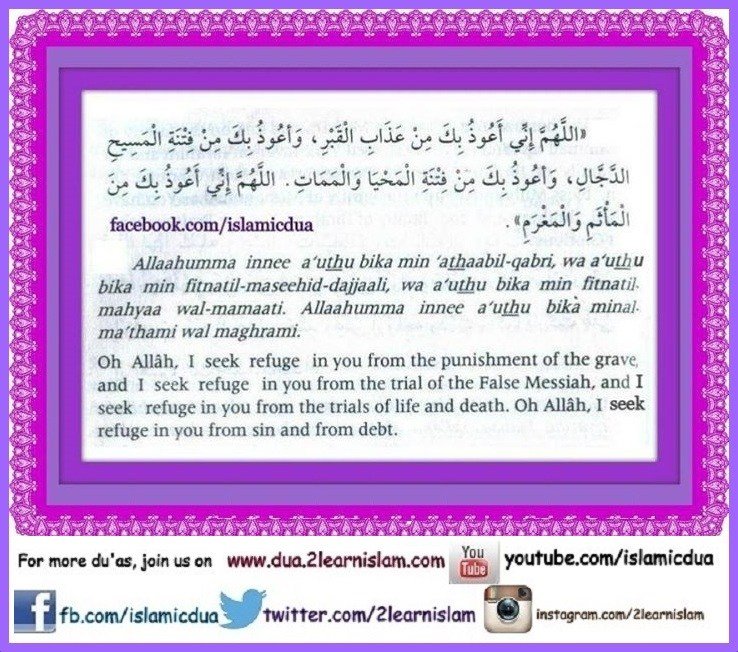
    O Allah, I seek refuge in You from the PUNISHMENT of the GRAVE, and I seek refuge in You from the trial of the False Messiah, and I seek refuge in You from the trials of life and death. O Allah, I seek refuge in You from SIN and from DEBT.”

    اللَّهُمَّ إِنِّي أَعُوذُ بِكَ مِنْ عَذَابِ الْقَبْرِ، وَأَعُوذُ بِكَ مِنْ فِتْنَةِ الْمَسِيحِ الدَّجَّالِ، وَأَعُوذُ بِكَ مِنْ فِتْنَةِ الْمَحْيَا وَالْمَمَاتِ. اللَّهُمَّ إِنِّي أَعُوذُ بِكَ مِنْ الْمَأْثَمِ وَالْمَغْرَمِ

    Allaahumma ‘innee ‘a’oothu bika min ‘athaabil-qabri, wa ‘a’oothu bika min fitnatil-maseehid-dajjaali, wa ‘a’oothu bika min fitnatil-mahyaa walmamaati. Allaahumma ‘innee ‘a’oothu bika minal-ma’thami walmaghrami.

    Al-Bukhari 1/202, Muslim 1/412.


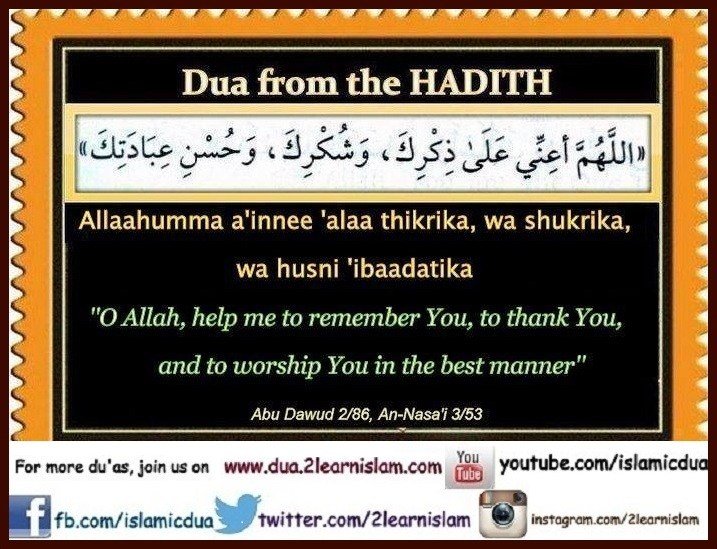
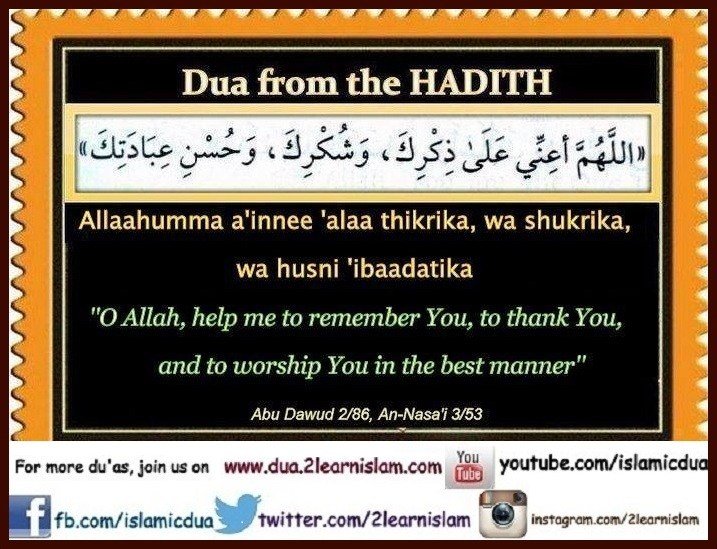
    O Allah, help me to remember You, to THANK You, and to perform Your worship in the best manner.”
    اللَّهُمَّ أَعِنَّي عَلَى ذِكْرِكَ، وَشُكْرِكَ، وَحُسْنِ عِبَادَتِكَ
    Allaahumma a’innee alaa thikrika, wa shukrika, wahusni ‘ibaadatik

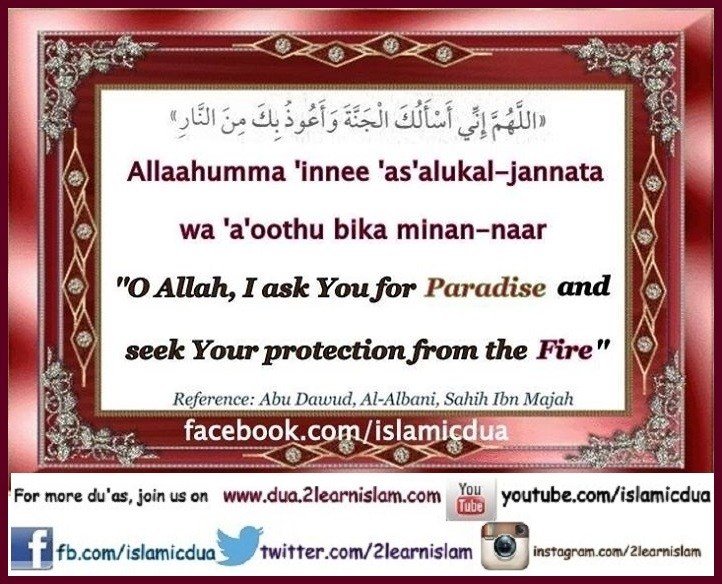
    O Allah, I ask You for PARADISE and seek Your protection from the FIRE”

    اللَّهُمَّ إِنِّي أَسْأَلُكَ الْجَنَّةَ وَأَعُوذُ بِكَ مِنَ النَّارِ
    Allaahumma ‘innee ‘as’alukal-jannata wa ‘a’oothu bika minan-naar.

    Reference: Abu Dawud. See also Al-Albani, Sahih Ibn Majah 2/328.