Tag: history

  • The Condition of People at the Time of Their Death

    The Condition of People at the Time of Their Death

    These are the three types of conditions that people face upon their death. Either they are among the near believers or those below their rank on the right, or those who denied the truth, were led astray from the guidance and were ignorant about Allah. Allah said,

    Surah Al-Waqiah

    (88. Then, if he be of the Muqarrabin,) (89. Then Rawh, Rayhan and a Garden of Delights.) (90. And if he be of those on the right,) (91. Then Salam (peace) to you from those on the right.) (92. But if he be of the denying, the erring,) (93. Then for him is an entertainment with Hamim.) (94. And entry in Hellfire.) (95. Verily, this! This is an absolute truth with certainty.) (96. So, glorify with praises the Name of your Lord, the Most Great.)

    (Then if he), in reference to the dying person,

    (be of the Muqarrabun) who fulfilled the obligations and the recommended acts of worship and avoided the forbidden and disliked matters and even some of the allowed,

    (then for him Rawh, Rayhan and a Garden of Delights.) Theirs will be Rawh and Rayhan; and the glad tidings of these traits will be conveyed to them by the angels at the time of death. The Prophet’s Hadith narrated from Al-Bara’ in which the angels of mercy say (to a dying, believing person),

    (O good soul in the good body that you inhabited, come to Rawh, Rayhan and a Lord Who is not angry.) `Ali bin Abi Talhah reported from Ibn `Abbas, “Rawh means rest, and Rayhan means place of rest.’‘ Mujahid said similarly that Rawh means rest. Abu Hazrah said that Rawh means: “Rest from the world.” Sa`id bin Jubayr and As-Suddi said that it means to rejoice. And from Mujahid:

    (Rawh and Rayhan) means: “Paradise and delights.” Qatadah said that Rawh means mercy. Ibn `Abbas, Mujahid and Sa`id bin Jubayr said that Rayhan means provisions. All of these explanations are correct and similar in meaning. The near believers who die will earn all of these; mercy, rest, provision, joy, happiness and good delights,

    (and a Garden of Delights.) Abu Al-`Aliyah said, “None of the near believers will depart (this life) until after he is brought a branch of the Rayhan of Paradise and his soul is captured in it.” Muhammad bin Ka`b said, “Every person who dies will know upon his death if he is among the people of Paradise or the people of the Fire.’‘ In the Sahih, it is recorded that the Messenger of Allah said,

    (The souls of the martyrs live in the bodies of green birds flying wherever they wish in the Gardens of Paradise, and then rest to their nests in chandeliers hung from the Throne of the Almighty....) Imam Ahmad recorded that `Ata’ bin As-Sa’ib said, “The first day I saw `Abdur-Rahman bin Abi Layla, I saw an old man whose hair had become white on his head and beard. He was riding his donkey and following a funeral. I heard him say, `So-and-so narrated to me that he heard the Messenger of Allah say,

    (He who likes to meet Allah, Allah likes to meet him, and he who hates to meet Allah, Allah hates to meet him.) The people around him started weeping, and he asked them why they wept. They said, `All of us hate death.’ He said,

    (It does not mean that. When one dies: (Then, if he be of the near believers, then for him are Rawh, Rayhan, and a Garden of Delights.)( and when this good news is conveyed to him, he likes to meet Allah the Exalted and Most Honored and Allah the Exalted and Most Honored likes, even more, to meet him, (But if he be of the denying, the erring, then for him is an entertainment with Hamim. And entry in Hellfire.)( and when this news is conveyed to him, he hates to meet Allah and Allah hates, even more, to meet him.)” This is the narration that Imam Ahmad collected; and in the Sahih, there is a Hadith with this meaning collected from `A’ishah. Allah’s statement,

    (And if he be of those on the right,) means, if he, the dying person, is among those on the right,

    (Then Salam (peace) to you from those on the right) meaning, the angels will deliver the good news to them by saying, “Peace be upon you,” i.e., be calm, you will be led to safety, you are among those on the right, as `Ikrimah said, “The angels will greet him with the Salam and convey to him the news that he is among those on the right. ” This is a good explanation, and it conforms with Allah’s statement,

    (Verily, those who say: “Our Lord is Allah.” and then they stand firm, on them the angles will descend (at the time of their death) (saying): “Fear not, nor grieve! But receive the glad tidings of Paradise which you have been promised! We have been your friends in the life of this world and are (so) in the Hereafter. Therein you shall have (all) that your souls desire, and therein you shall have (all) for which you ask. An entertainment from the Oft-Forgiving, Most Merciful.”) (41:30-32). Allah’s statement,

    (But if he be of the denying, the erring, then for him is an entertainment with Hamim (boiling water) and entry in Hellfire.) meaning, if the dying person is one of those who denied the truth, who were led astray from guidance,

    (then for him is an entertainment,) meaning, as a guest

    (with Hamim) that dissolves his intestines and skin,

    (And entry in Hellfire.) he will reside in Hellfire, which will engulf him from every direction. Allah the Exalted said, next,

    (Verily, this! This is an absolute truth with certainty.) meaning, this news is the truth; there is no doubt about it, nor escape from it for anyone,

    (So, glorify with praises the Name of your Lord, the Most Great.) Jabir narrated that the Messenger of Allah said,

    (He who says, “Glory be to Allah the Magnificent and with His praise!” then a date tree will be planted for him in Paradise.) This Hadith was collected by At-Tirmidhi and An-Nasa’i; At-Tirmidhi said, “Hasan Gharib.” Al-Bukhari recorded in his book (Sahih) that Abu Hurayrah said that the Messenger of Allah said,

    ((There are) two statements that are light on the tongue, but heavy on the Balance, and most beloved to Ar-Rahman: “Glory be to Allah and with His praise, glory be to Allah the Magnificent.”) The Group, with the exception of Abu Dawud, collected this.

  • The Reasons Which Cause Love of Allāh


    The reasons which cause love of Allāh to develop, are TEN:

    First : Reciting the Qur‘ân, reflecting and understanding its meaning and its intent.

    Second: Drawing closer to Allāh – the Most High – through optional deeds, after fulfilling the obligatory duties.

    Third: Being continuous in the dhikr (remembrance) of Allāh, with the tongue, the heart and the limbs – under all circumstances. The more constant the dhikr, the more mahabbah develops and intensifies.

    Fourth: Giving precedence to what Allāh loves over personal loves, when being overcome by desires.

    Fifth: Contemplating and deliberating over the Names and Attributes of Allāh.

    Sixth: Recognising and remembering the favours and bounties of Allāh – both the manifest and hidden.

    Seventh: To be humble and submissive before Allāh – and this is the greatest matter.

    Eighth: To be in seclusion reciting the Qur‘ân, during that time in which Allāh descends to the lowest heaven (which is the last third of every night), finishing this recitation with seeking Allâh’s forgiveness and repenting to Him.

    Ninth: To sit in the gatherings of true and sincere lovers of Allāh, reaping the fruits of their speech, and not to speak except if there is benefit in it and that you know that such talk will increase you in goodness and that it will benefits others as well.

    Tenth: To stay clear of all those causes which distances the heart from Allāh – the Mighty and Majestic.

    So these are the ten reasons which cause the person to develop true love for Allāh and to reach the rank of al-muhabbah, by which he reaches his Beloved.” [Madārijus-Sālikīn  (pp.470-473)


    Source: Foundations of True Faith : Love for Allah – Al-Ibānah Magazine , Issue No.1 – By Shaykh ’Abdur-Rahmân ibn Hasan Ālush-Shaykh , Fathul-Majīd Sharh Kitābit-Tawhīd (pp.470-473)


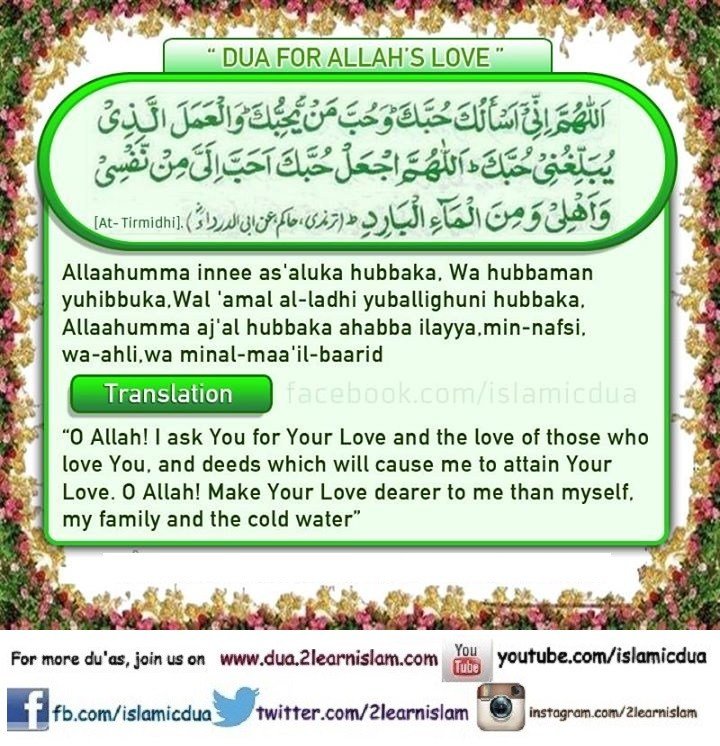
    Dua to gain ALLAH’S LOVE, love of other people and good deeds


    Click here for this dua

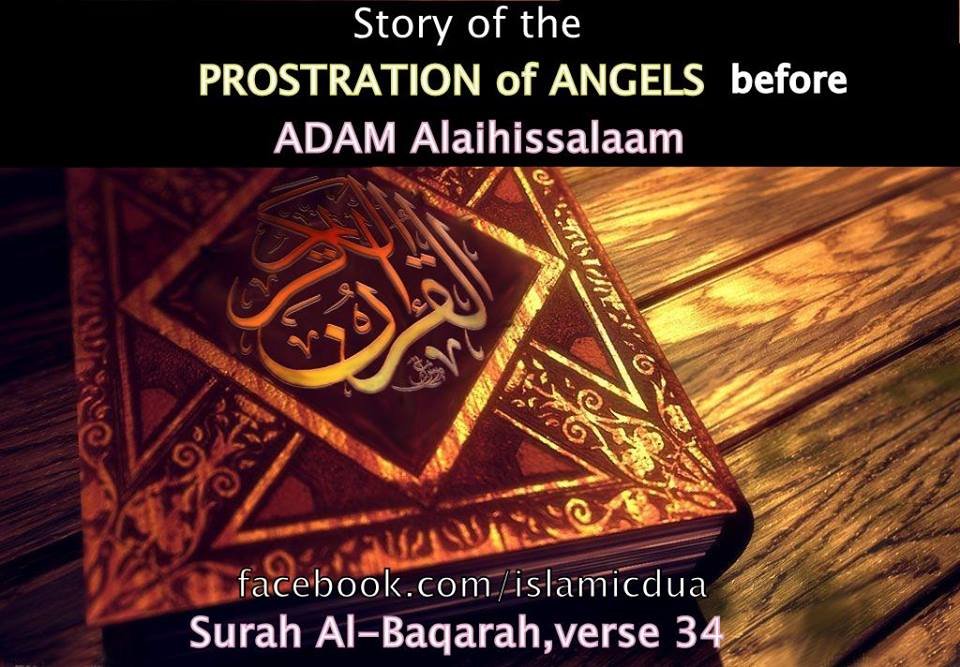
  • Story of the PROSTRATION of ANGELS before ADAM Alaihissalaam and Satan’s REFUSAL

    Story of the PROSTRATION of ANGELS before ADAM Alaihissalaam and Satan’s REFUSAL

    story2

    Surah Al-Baqarah,verse 34 ”And [mention] when We said to the angels, “Prostrate before Adam”; so they prostrated, except for Iblees. He refused and was arrogant and became of the disbelievers”

    This Ayah mentions the great honor that Allah granted Adam Alaihissalaam, and Allah reminded Adam Alaihissalaam’s offspring of this fact. Allah commanded the angels to prostrate before Adam Alaihissalaam, as this Ayah and many Hadiths testify.

    There is a Hadith about the supplication of Musa Alaihissalaam , “O my Lord! Show me Adam who caused us and himself to be thrown out of Paradise.” When Musa Alaihissalaam met Adam Alaihissalaam, he said to him, “Are you Adam whom Allah created with His Own Hands, blew life into and commanded the angels to prostrate before”

    Iblis was among Those ordered to prostrate before Adam Alaihissalaam, although he was not an Angel.

    When Allah commanded the angels to prostrate before Adam Alaihissalaam, Iblis was included in this command. Although Iblis was not an angel, he was trying – and pretending – to imitate the angels’ behavior and deeds, and this is why he was also included in the command to the angels to prostrate before Adam Alaihissalaam. Satan was criticized for defying that command.

    Ibn `Abbas said, “Before he undertook the path of sin, Iblis was with the angels and was called `Azazil.’ He was among the residents of the earth and was one of the most active worshippers and knowledgeable persons among the angels. This fact caused him to be arrogant. Iblis was from a genus called Jinn.”

    The Prostration was before Adam Alaihissalaam but the Obedience was to Allah.

    Qatadah commented on Allah’s statement,
    (And (remember) when We said to the angels: “Prostrate yourselves before Adam.”)

    “The obedience was for Allah and the prostration was before Adam Alaihissalaam . Allah honored Adam Alaihissalaam and commanded the angels to prostrate before him.” Some people said that this prostration was just a prostration of greeting, peace and honor
    Ar-Razi agreed with this view. Also, Qatadah said about Allah’s statement,

    (And they prostrated except Iblis (Shaytan), he refused and was proud and was one of the disbelievers (disobedient to Allah).)

    “Iblis, the enemy of Allah, envied Adam because Allah honored Adam Alaihissalaam. He said, `I was created from fire, and he was created from clay.’ Therefore, the first error ever committed was arrogance, for the enemy of Allah was too arrogant to prostrate before Adam Alaihissalaam .”  Ibn Kathir said the following is recorded in the Sahih,

    (No person who has the weight of a mustard seed of arrogance in his heart shall enter Paradise.)

    Iblis had disbelief, arrogance, and rebellion, all of which caused him to be expelled from the holy presence of Allah, and His mercy.

    May Allah save us from ARROGANCE and the traps of Shaitan, ameen

     Click here to learn a dua from the Holy Quran to seek protection from Satan and his helpers

  • Biography of Prophet Mohammad (ﷺ)-The DREAM of our Prophet’s Mother

    Biography of Prophet Mohammad (ﷺ)-The DREAM of our Prophet’s Mother

    pic1

    After you finish reading this, don’t forget to send durood on our Holy Prophet Mohammad Sallal laahoo alaihi wassallam and share this knowledge with your friends and family.

    Today we will learn about The DREAM of our Prophet’s Mother (Peace and blessings be upon him)which she had before his birth.

    The marriage of his parents was not the beginning of the Prophet’s affair.

    When the Prophet (Peace and blessings be upon him) was once asked about the beginning of his affair, he said, “I am the supplication of my father Ibraaheem Alaihissalaam (i.e., the answer to his supplication) and the glad tidings of my brother ‘Eesa Alaihissalaam .
    And my mother saw (in a dream) that light came out of her, light that illuminated the castles of Ash-Sham (Ash-Sham refers to the region of Syria and neighbouring
    lands).

    Commenting on these words, Ibn Rajab said, “The coming out of this light at the time of his birth is an indication of the light that he was to come with, that the people of earth were to be guided by, and that was going to remove the darkness of Shirk (polytheism, to associate partners with Allah in worship)

    Allah said:
    “O people of the Scripture (Jews and Christians)! Now has come
    to you Our Messenger (Muhammad ) explaining to you much
    of that which you used to hide from the Scripture and passing over
    (i.e., leaving out without explaining) much. Indeed, there has
    come to you from Allah a LIGHT (Prophet Muhammad Peace and blessings be upon him ) and a plain Book (this Qur’an) .
    Wherewith Allah guides all those who seek His Good Pleasure to ways of peace, and He brings them out
    of darkness by His Will unto light and guides them to a Straight Way (Islamic Monotheism) .” (Quran 5: 15, 16)

    Ibn Katheer said, “The specific mention of Ash-Sham as being the
    place where his light shall appear points to how Islam will have a
    stable and firm footing in the lands of Ash-Sham.”

    In the end times ,(i.e., just before the end of this world), Ash-Sham will be a stronghold of Islam and its adherents, and it is there that ‘Eesa Alaihissalaam (Jesus) ibn Maryam will descend – in Damascus, at the white minaret on its eastern side.

    It is related both in Saheeh Bukhaaree and
    Saheeh Muslim that the Prophet (Peace and blessings be upon him)said, “A group from my nation will continue to remain successful upon the truth; they will not be harmed by those who forsake them, nor by those who oppose them;
    (they will remain upon that state) until Allah’s command comes (i.e., a gentle, good wind that will take the souls of all believers), and they will still be upon that state.


    Click here to read Durood e paak.


  • Biography of Prophet Mohammad (ﷺ) – The Marriage of his parents

    Biography of Prophet Mohammad (ﷺ) – The Marriage of his parents

    1975164_10152315678249766_1987161183_n

    After you finish reading this, don’t forget to send durood on our Holy Prophet Mohammad Sallal laahoo alaihi wassallam and share this knowledge with your friends and family.

    Today we will learn about The MARRIAGE of his parents (Abdullah and Aminah) and his father’s death.

    ‘Abdullah Ibn ‘Abdul- Muttalib’s Marriage To Aaminah bint Wahb :

    ‘Abdullah was one of ‘Abdul-Muttalib’s most beloved sons.
    ‘Abdullah was about to be slaughtered at one point during his youth but he was spared and his father paid 100 camels for his ransom.

    ‘Abdullah got married to Aaminah bint Wahb ibn ‘Abd-Manaaf ibn Zuhrah ibn Kilaab, whose lineage was very noble indeed.

    Either before the Prophet’s birth or shortly afterwards (historical
    accounts differ in this regard), ‘Abdullah died and was buried in Al-Madeenah, alongside his uncles from the Banu ‘Adee ibn An-Najjaar clan.

    He had gone to Ash-Sham (Syria and surrounding
    regions) for a business trip, and death overtook him in Al-
    Madeenah, during his return journey; but he had already
    impregnated his wife. And so it was as if it was being said to him:

    “Your mission in life is complete; as for this pure child you leave
    behind, Allah will, with His Wisdom and Mercy, take care of him
    and prepare him for the task of taking mankind out of darkness
    and bringing them into the light”


    Click on the link given below to read Durood e paak.


    https://2learnislam.com/2015/10/27/durood-e-paak/

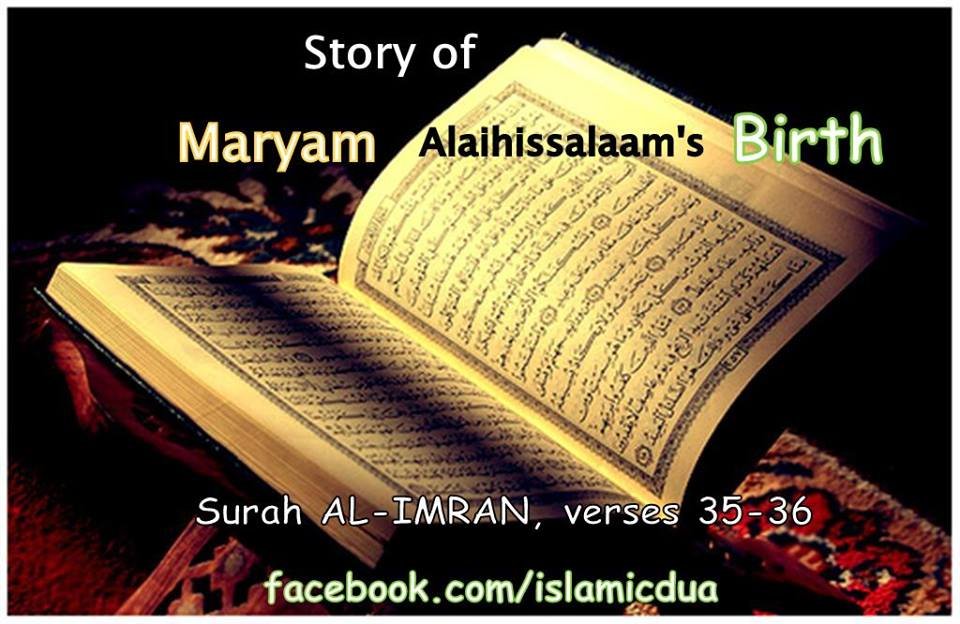
  • Stories from the Quran (The birth of Maryam Alaihissalaam)

    Stories from the Quran (The birth of Maryam Alaihissalaam)

    stories1

    The Story of Maryam Alaihissalaam’s Birth (Mother of Prophet Issa Alaihissalaam)

    Surah AL-IMRAN, verses 35-36

    (35. (Remember) when the wife of `Imran said: “O my Lord! I have vowed to You what is in my womb to be dedicated for Your services, so accept this from me. Verily, You are the All-Hearer, the All-Knowing.”) (36. Then when she gave birth to her, she said: “O my Lord! I have given birth to a female child, ـ and Allah knew better what she bore, ـ “And the male is not like the female, and I have named her Maryam, and I seek refuge with You for her and for her offspring from Shaytan, the outcast.”)

    The wife of `Imran mentioned here is the mother of Maryam Alaihissalaam, and her name is Hannah bint Faqudh. Muhammad bin Ishaq mentioned that Hannah could not have children and that one day, she saw a bird feeding its chick. She wished she could have children and supplicated to Allah to grant her offspring. Allah accepted her supplication, and when her husband slept with her, she became pregnant. She vowed to make her child concentrate on worship and serving Bayt Al-Maqdis (the Masjid in Jerusalem), when she became aware that she was pregnant.

    She said,
    (O my Lord! I have vowed to You what is in my womb to be dedicated for Your services, so accept this from me. Verily, You are the All-Hearer, the All-Knowing.) meaning, You hear my supplication and You know my intention. She did not know then what she would give birth to, a male or a female.

    (Then when she gave birth to her, she said: “O my Lord! I have given birth to a female child, ـ and Allah knew better what she bore.)

    (And the male is not like the female,) in strength and the commitment to worship Allah and serve the Masjid in Jerusalem.

    (And I have named her Maryam,) thus, testifying to the fact that it is allowed to give a name to the newly born the day it is born, as is apparent from the Ayah, which is also a part of the law of those who were before us.

    Further, the Sunnah of the Messenger of Allah mentioned that the Prophet Sallal laahoo alaihi wassallam said,

    (This night, a son was born for me and I called him by my father’s name, Ibrahim.) Al-Bukhari and Muslim collected this Hadith.

    Allah’s statement that Maryam Alaihissalaam’s mother said,

    (“And I seek refuge with You for her and for her offspring from Shaytan, the outcast.”) means, that she sought refuge with Allah from the evil of Shaytan, for her and her offspring, i.e., `Isa, peace be upon him. Allah accepted her supplication, for `Abdur-Razzaq recorded that Abu Hurayrah (Radi Allahu anhu) said that the Messenger of Allah Sallal laahoo alaihi wassallam said,

    (Every newly born baby is touched by Shaytan when it is born, and the baby starts crying because of this touch, except Maryam and her son.)

    Abu Hurayrah then said, “Read if you will,

    (And I seek refuge with You for her and for her offspring from Shaytan, the outcast).” The Two Sahihs recorded this Hadith.

    Dua from this story to seek Allah’s Protection for your daughter and grandchildren:

    ”And I seek refuge with You (Allah) for her and for her offspring from Shaitan (Satan), the outcast.”

    Wa innee o’eethuhaa bika wathurriyyatahaa minash-shaytaanir-rajeem

    Surah Al- Imran, verse 36

    Click on the link given below to learn a beautiful dua of Prophet Ibrahim Alaihissalaam to have pious children

    https://2learnislam.com/2016/03/10/dua-for-your-children/


  • Biography of Prophet Mohammad (ﷺ)- The Lineage

    Biography of Prophet Mohammad (ﷺ)- The Lineage

    1958349_10152315653864766_1368382146_n

    After you finish reading this, don’t forget to send durood on our Holy Prophet Mohammad Sallal laahoo alaihi wassallam and share this knowledge with your friends and family.

    Today we will learn about The LINEAGE Of The Prophet (Peace be upon him).

    Just as he is the most complete of people in terms of character,
    our Prophet (Peace be upon him) is superior to all other human beings in terms of his noble lineage.

    The Prophet (Peace be upon him) said, “Verily, Allah – ‘Azza wa-Jall
    (the Possessor of might and majesty) – chose Ismaa’eel from the
    children of Ibraaheem; Kinaanah from the children of Ismaa’eel;
    Quraish from Kinaanah; the children of Haashim from Quraish;
    and me from the children of Haashim.”

    Imam Bukhaaree, may Allah have mercy on him – mentioned the
    lineage of the Prophet (Peace be upon him) (keep in mind that ‘ibn’ means, ‘son of):

    “He is Abul-Qaasim Muhammad ibn ‘Abdullah ibn ‘Abdul-
    Muttalib ibn Haashim ibn ‘ Abd-Manaaf ibn Qusai ibn Kilaab ibn
    Murrah ibn Ka’ab ibn Luaiy ibn Ghaalib ibn Faihr ibn Maalik ibn
    An-Nadar ibn Kinaanah ibn Khuzaimah ibn Mudrikah ibn Ilyaas
    ibn Mudar ibn Nizaar ibn Ma’ ad ibn ‘Adnaan.” [1]

    In Sharhus-Sunnah, Al-Bagawee mentioned the Prophet’s lineage
    up until ‘Adnaan, and then said, “Beyond ‘Adnaan, his lineage is
    not correctly memorized.”

    Ibn Al-Qayyim mentioned the Prophet’s lineage until ‘Adnaan
    and then said, “(The Prophet’s) lineage until here is known to be
    correct and is agreed upon by genealogists, so there is no
    disagreement whatsoever. As for what is beyond ‘Adnaan, there
    is difference of opinion. Yet they (genealogists) unanimously
    agree that ‘Adnaan is from the direct line of Ismaa’eel Alaihissalaam

    And Ibn Sa’d wrote in his Tabaqaat: “We refrain (from claiming
    any knowledge about the lineage of the Prophet (Peace be upon him) between ‘Adnaan and Ismaa’eel .”

    Men with noble lineages have throughout history been accorded
    with special honour. People question the right of a person of low lineage to be a leader – a king, a president, an emperor, etc.

    Since the Prophet (Peace be upon him)was being prepared for Prophethood, Allah blessed him with a
    noble lineage, thus making it easier for people to accept and
    follow him.

    The Prophet(Peace be upon him) indeed possesses the most wonderful lineage. He is from the direct line of both Ismaaeel Alaihissalaam and Ibraaheem Alaihissalaam


    Furthermore, he is the answer to Ibraaheem Alaihissalaam’ s supplication; he said about himself, “I am the supplication of my father Ibraaheem (i.e., the answer to his supplication), and the glad
    tidings of my brother ‘Eesa (Jesus).”

    Click here to read and download the pic of Durood-e-Paak (to send peace and blessings on our HOLY PROPHET (PEACE BE UPON HIM)

    It is most often the case that people who are blessed with noble lineages aspire for higher goals and aims, and turn away from base desires; and of course, this was especially true of Prophets and Messengers

    [1] Saheeh Bukhaaree, “The Virtues of the Ansaar”; chapter, “The Sending of the Prophet Peace be upon him.” Hadeeth number: 3851

  • Biography of Prophet Mohammad (ﷺ)-Events before his birth (Destruction of Abraha and his army)

    Biography of Prophet Mohammad (ﷺ)-Events before his birth (Destruction of Abraha and his army)

    1795765_10152315232009766_173149985_n


    Today we will learn about an important event that took place before the Birth Of The Prophet (Peace be upon him).


    After you finish reading this, don’t forget to send durood on our Holy Prophet Mohammad Sallal laahoo alaihi wassallam and share this knowledge with your friends and family.

    As the Prophet’s birth approached, many signs occurred that affirmed his Prophethood and blessedness; one of the greatest of those signs was what happened to Abraha and his army.

    This is mentioned in the Holy Quran. ”Have you (O Muhammad) not seen how your Lord dealt with the owners of the elephant?”

    (The elephant army which came from Yemen under the command of Abraha Al-Ashram intending to destroy the Ka’bah at Makkah),

    “Did He not make their plot go astray? And sent against them birds, in flocks, striking them with stones of Sijjil. And made them like an empty field of stalks (of which the corn has been eaten up by cattle) . ” (Qur’an 105; 1-5)

    Many scholars maintain that the story of the elephant is one of the signs of the Prophethood of Muhammad (Peace be upon him).

    How so? First, had the Quraish fought Abraha and lost the battle, they would have been taken as slaves and prisoners. But Allah destroyed Abraha, thus protecting the Prophet (Peace be upon him) from being born a slave.

    Second, based on their beliefs and practices, the Quraish did not deserve to be protected from the army of the elephant; they were idol worshippers who were far astray from the truth. When it came to protecting Makkah, what was important was honoring the Ka’bah and paving the way for the Prophet (Peace be upon him).

    The events of the story point to the advent of Muhammad (Peace be upon him),who was in his mother’s womb when they occurred; he was born 50 days later.

    When Arabs learned of what Allah did with the Army of the Elephant, they felt awe and veneration for Makkah, and they treated the Quraish with greater honour than ever before.

    This sign (the miraculous destruction of Abraha’ s army) did not take place for the sake of those who lived beside the Ka’bah at that time, but instead for the sake of the House itself, or for the sake of the Prophet (Peace be upon him) who was born that year beside the House.

    Such was Allah’s planning for His House and religion, even before anyone knew that the Messenger of Allah was going to be born in that same year.

    In remembering the story of Abraha, we should feel consolation and hope when we see the imperial designs of those who greedily look at our lands – and especially our holy lands – with hopes of conquest. Allah protected His House from the People of the Book when Makkah was inhabited by polytheists; now both Makkah and Al-Madeenah are inhabited by Muslims, and so He certainly will – Insha Allah – defend and protect both holy lands from evildoers.


    Click here to read and download the pic of Durood-e-Paak (to send peace and blessings on our HOLY PROPHET (PEACE BE UPON HIM)


  • Biography of Prophet Mohammad (ﷺ)- Important events before his birth

    Biography of Prophet Mohammad (ﷺ)- Important events before his birth


    In sha Allah everyday,we will try to post articles on the life history of our Noble Prophet Mohammad (Peace be upon him).

    After you finish reading this, don’t forget to send durood on our Holy Prophet Mohammad Sallal laahoo alaihi wassallam.

    Today we will learn about some important events that took place before the Birth Of The Prophet (Peace be upon him).

    Before delving into the study of the Prophet’s birth and early years, we are discussing those events that had a direct bearing on Islam, that represented the dark days of pre-Islamic ignorance, or that signaled the great change that was about to take place in Arabia and in the entire world.

    True, the earth was immersed in darkness; but it is from Allah’s Sunan (ways; Sunan is plural of Sunnah) regarding the universe that relief comes after hardship, that light comes after darkness, and that ease comes after difficulty.


    Click here to read and download the pic of Durood-e-Paak (to send peace and blessings on our HOLY PROPHET (PEACE BE UPON HIM)

    Abdul-Muttalib-The grandfather of Prophet Mohammad (Sallal lahoo alaihi wassallam) Digs The Well Of Zamzam

    In his highly beneficial book, Saheeh As-Seerah An-Nabawiyyah, Shaikh Ibraaheem Al-‘ Alee mentioned an authentic narration that describes how ‘ Abdul-Muttalib found and dug the well of Zamzam . Of course, it was Haajar who first found the well of Zamzam, but history books record that, because of the wickedness of later generations, the Zamzam well became buried and, if not forgotten, then at least lost – until the time of ‘Abdul-Muttalib.

    Abdul-Muttalib said, ” While I was sleeping in Al-Hijr (a part of the Ka’bah that is on its northern side), someone came to me and said, ‘Dig Taibah (Taibah comes from the word Tayyib, which means goodness) ‘And what is Taibah?’ I asked, but he then left me.

    On the following day, I returned to my place of sleep (in Al-Hijr) . When I fell asleep there, he came to me (again) and said, ‘Dig Barrah (Barrah comes from the word Birr, which means goodness and purity) ‘And what is Barrah?’ I asked, but he (again) left me.

    On the following day, I returned to my place of sleep. And when I fell asleep there, he came to me and said, ‘Dig Al-Madnoonah.’ ‘And what is Al-Madnoonah, I asked, but he left (again without answering me).

    On the following day, I returned to my place of sleep. After I fell asleep there, he came to me and said, ‘Dig Zamzam.’ ‘And what is Zamzam?’ I asked. He said, ‘It (is a well that) never runs dry, and it is not dispraised (i.e., it is fresh and good). It is drink for the greater pilgrims (i.e., those who come for Hajj) . And it is situated (so go and find it there) between excrement and blood, at the eyehole of the Al-‘ Asim crow (i.e., the crow that has whiteness in its legs), at the village of the ants”

    After he was made aware of the significance and location of the Zamzam well, ‘Abdul-Muttalib went out (to search for it) with an axe. He took along with him Al-Haarith ibn ‘Abdul-Muttalib, who was, at the time, ‘Abdul-Muttalib’s only son.

    When ‘Abdul- Muttalib saw the edge of the well, he magnified Allah , by exclaiming, “Allahuakbar (Allah is the Greatest)!” By the sound of his voice, the Quraish knew that he found what he had been looking for, and so they went to him. They said, “O ‘Abdul-Muttalib, this indeed is the well of our father, Ismaa’eel, and we have a right over it, so make us a partner to you in it (i.e., in its ownership)’

    He said, “I will not do so; this is a matter for which I, and not you, have been specifically chosen, and which I have been given from among you’ They said, “Then do us justice, for we will not leave you alone, but will instead dispute with you over it.”

    He said, “Then appoint whomsoever you wish, and we will take the matter to him for judgment.” They said, ” (We choose) the soothsayer of Banu Sa’d ibn Hudhaim.” He said, “Yes (agreed) The man they had chosen lived in the border regions of Ash-Sham (the area of Ash-Sham consists of Syria and neighbouring lands).

    With a group of companions from his subtribe -the children of ‘Abd-Manaaf – ‘Abdul-Muttalib set out for the journey to Ash-Sham. Joining them on the journey was a group of people from every subtribe of the Quraish.

    Between them and their destination was a vast desert land, void of any villages or townships; so the journey was not going to be an easy one. And it proved difficult indeed, for, at some point during the journey, ‘Abdul-Muttalib and his companions ran out of water. They then remained thirsty for so long that they were sure that death was imminent.

    The other sub-tribes, however, did have water, but when the children of ‘Abd-Manaaf asked them for some, they refused, saying, “We are in the desert, and we fear that what happened to you will happen to us (if we are too free with our water)’ ‘

    Each man among them dug his grave and then sat down, waiting for his death. But then ‘Abdul-Muttalib said to them, “By Allah, for us to kill ourselves in this manner will not make us deserving of (praise) on earth, and we should not be weak like this. Perhaps Allah will provide us with water in some land (ahead of us), so prepare to move on.”

    They were getting ready to leave, when ‘Abdul-Muttalib made his camel stand up, and gushing forth from underneath its hooves was a spring of fresh water. ‘Abdul-Muttalib and his companions exclaimed, “Allahuakbar (Allah is the Greatest).” They all drank water and filled their containers. They then invited the other subtribes of the Quraish, who, all the while, had been watching their every move.

    ‘Abdul-Muttalib said, “Come to this water, for Allah has indeed provided us with drink.” They came, drank, and filled their containers with water.

    They then said, “By Allah, we will never again enter into a dispute with you regarding Zamzam, for the One Who has given you this water to drink in this barren land, is indeed the One Who gave you Zamzam to drink. So return to your water rightly-guided.”

    There being no point to go to the soothsayer of Banu Sa’d, they all returned to Makkah, and no one thereafter argued about ‘Abdul-Muttalib’s right to have complete control over the Zamzarn well.

    Narrations are related to the superiority and virtues of Zamzam water

    The Messenger of Allah said, “Indeed, it (Zamzam water) is blessed; indeed, it is Ta’aam To’om (i.e., just as food fills a person, Zamzam water fills a person who drinks it).”

    Al-Haakim related from Ibn ‘Abbaas that the Prophet (Peace be upon him) said, “Zamzam water achieves the purpose for which it is consumed: If you drink it to seek a cure, Allah will cure you; if you drink it to make you full, Allah will make you full; if you drink it to cut off your thirst, Allah will (cut off your thirst). It is the Hazma of Jibreel (i.e., the effect of his striking the ground with his ankle or wing), and the drink Allah provided to Ismaa’eel.”

    Al-Haakim declared this Hadeeth to be authentic.

    Durood-e-Paak


    ”Indeed,Allah and His angels send blessings on the Prophet: O you who have believed, Send ye blessings on him, and salute him with all respect” [33:56]

    ”O Allah, bestow Your favor on Muhammad (Peace be upon him) and on the family of Muhammad (Peace be upon him) as You have bestowed Your favor on Ibrahim (Peace be upon him) and on the family of Ibrahim (Peace be upon him), You are Praiseworthy, Most Glorious.

    O Allah, bless Muhammad (Peace be upon him) and the family of Muhammad (Peace be upon him) as You have blessed Ibrahim (Peace be upon him) and the family of Ibrahim(Peace be upon him) , You are Praiseworthy, Most Glorious”

    ِﻋَﻠَﻰ ﺇِﺑْﺮَﺍﻫِﻴﻢَ ﻭَﻋَﻠَﻰ ﺁﻝِ ﺇِﺑْﺮَﺍﻫِﻴﻢَ، ﺇِﻧَّﻚَ ﺣَﻤِﻴﺪٌ ﻣَﺠِﻴﺪٌ ﺇِﺑْﺮَﺍﻫِﻴﻢَ، ﺇِﻧَّﻚَ ﺣَﻤِﻴﺪٌ ﻣَﺠِﻴﺪٌ، ﺍﻟﻠَّﻬُﻢَّ ﺑَﺎﺭِﻙَ ﻋَﻠَﻰ ﻣُﺤَﻤَّﺪٍ ﻭَﻋَﻠَﻰ ﺁﻝِﻣُﺤَﻤَّﺪٍ ﻛَﻤَﺎ ﺑَﺎﺭَﻛْﺖَ ﺍﻟﻠَّﻬُﻢَّ ﺻَﻞِّ ﻋَﻠَﻰ ﻣُﺤَﻤَّﺪٍﻭَﻋَﻠَﻰ ﺁﻝِ ﻣُﺤَﻤَّﺪٍ،ﻛَﻤَﺎ ﺻَﻠَّﻴْﺖَ ﻋَﻠَﻰ ﺇِﺑْﺮَﺍﻫِﻴﻢَ، ﻭَﻋَﻠَﻰ ﺁﻝ

    Allahumma salli alaa muhammadin wa alaa aali muhammadin kamaa sallaita alaa ibrahima wa alaa aali ibrahima innaka hameedum majeed

    Allaahumma baarik alaa muhammadin wa alaa aali muhammadin kamaa baarakta alaa ibrahima wa alaa aali ibrahima innaka hameedum majeed