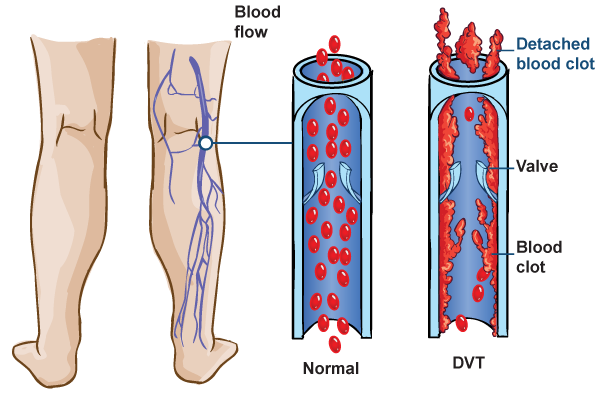
Deep vein thrombosis, a blood clot that forms in a deep vein, usually in a leg, might be the most serious health risk you’ve never heard of. It can be a serious risk for some long-distance travelers. Traveling more than four hours, whether by air, car, bus, or train, can be a risk for blood clots.
Cause:
Blood clots can form in the deep veins (veins below the surface that are not visible through the skin) of your legs during travel because you are sitting still in a confined space for long periods of time. The longer you are immobile, the greater is your risk of developing a blood clot. Many times the blood clot will dissolve on its own. However, a serious health problem can occur when a part of the blood clot breaks off and travels to the lungs causing a blockage. This scenario is called a pulmonary embolism, and it can be fatal.
When you walk, the muscles of the legs squeeze the veins and move blood to the heart. Soleus,a muscle at the back of the leg, is also responsible for pumping venous blood back into the heart from the periphery, and is often called the skeletal-muscle pump, peripheral heart or the sural pump.
Any long period of immobility, such as being bedridden from illness, recovering from surgery, or sitting for extended periods while traveling, is a risk factor for DVT and pulmonary embolism.
Click here for all the duas which can be recited for Good Health
Situations that can lead to it
- Prolonged immobility
- long airplane flights or road trips
- prolonged bed rest after surgery
- pregnancy
- genetic blood clot disorders.
- Obesity
How to minimize your risk
Don’t take a very long trip without stopping every couple of hours. Get out and walk a bit. No matter what the mode of transportation, sitting motionless for long periods may put some travelers at an increased risk for deep vein thrombosis (DVT), a blood clot in a vein deep within the muscles, usually in the calf or thigh.
Take Breaks on a Long Road Trip
Stay Hydrated on a Long Flight
Keep up With Meds When on Vacation
If your doctor has told you to take low-dose aspirin or other anticoagulant medicines daily to prevent a blood clot, take them as prescribed no matter where you are or what you’re doing.
Keep Moving When You’re Pregnant
When you’re pregnant, natural changes in your body reduce blood flow and make your blood more likely to clot, conditions that continue for several weeks after baby is born.
Click here for duas which can be recited during Pregnancy
Symptoms:
About half of people with DVT have no symptoms at all. The following are the most common symptoms of DVT that occur in the affected part of the body (usually the leg or arm):
- Swelling of your leg or arm
- Pain or tenderness that you can’t explain
- Skin that is warm to the touch
- Redness of the skin
Protect Yourself and Reduce Your Risk of Blood Clots During Travel
-
Be alert to the signs and symptoms of blood clots.
-
Reduce the risk while traveling
- Move your legs frequently when on long trips and exercise your calf muscles to improve the flow of blood. If you’ve been sitting for a long time, take a break to stretch your legs. Extend your legs straight out and flex your ankles (pulling your toes toward you). Pull each knee up toward the chest and holding it there with your hands on your lower leg for 15 seconds, and repeat up to 10 times. These types of activities help to improve the flow of blood in your legs.
- If you are at risk, talk with your doctor to learn more about how to prevent blood clots. For example, some people may benefit by wearing graduated compression stockings.
- If you are on blood thinners, also known as anticoagulants, be sure to follow your doctor’s recommendations on medication use.
Click here for a dua for your protection from DISEASES and INSANITY