Author: mylifeduas@gmail.com

  • The Sutrah

    Learn how to perform SALAH according to SUNNAH [A step-by-step guide]

     The Sutrah, and the Obligation to have one:

    “He (sallallaahu ‘alaihi wa sallam) used to stand near to the sutrah, so that there was (a distance of) three cubits between him and the wall” and “between the place of his prostration and the wall, (there was) enough space for a sheep to pass.”

    He used to say: “Do not pray except towards a sutrah, and do not let anyone pass in front of you, but if someone continues (to try to pass) then fight him, for he has a companion (i.e. a shaytaan) with him.”

    He would also say: “When one of you prays towards a sutrah, he should get close to it so that Shaytaan cannot break his prayer.”

    Sometimes “he would seek to pray at the pillar which was in his mosque.”

    “When he prayed [in an open space where there was nothing to use as sutrah] he would plant a spear in the ground in front of him and pray towards it with the people behind him”;

    Sometimes “he would to set his mount sideways and pray towards it” but this is not the same as prayer in the resting-place of camels, which “he forbade”, and sometimes “he would take his saddle; set it lengthways and pray towards its end.”

    He would say: When one of you places in front of him something such as the stick on the end of a saddle, he should pray and not mind anyone who passes beyond it.

    Once “he prayed towards a tree” and sometimes “he would pray towards the bed on which ‘Aa’ishah (radi Allaahu anhaa) was lying [under her sheet].”

    He (sallallaahu ‘alaihi wa sallam), would not let anything pass between him and his sutrah, hence once “he was praying, when a sheep came running in front of him, so he raced it until he pressed his belly against the wall [and it passed behind him].”

    Also, once “while praying an obligatory prayer, he clenched his fist (during it), so when he had finished, the people said: ‘O Messenger of Allaah(sallallaahu ‘alaihi wa sallam), , did something happen during the prayer?’ He said: No, except that the devil wanted to pass in front of me, so I strangled him until I could feel the coldness of his tongue on my hand
    By Allaah! Had my brother Sulaimaan not beaten me to it, I would have tied him (the devil) to one of the pillars of the mosque so that the children of Madinah could walk round him. [So whoever can prevent something intervening between him and the qiblah, he must do so].”

    He(sallallaahu ‘alaihi wa sallam), also used to say:

    When one of you prays towards something which is a sutrah between him and the people and someone intends to cross in front of him, then he should push him in the throat [and repel, as much as he can], (in one narration: he should stop him, twice) but if he refuses (to not pass) then he should fight him, for verily he is a devil.

    He also used to say: If the person who passed in front of someone praying knew (the sin) on him, it would be better for him to wait forty than to pass in front. (Abu an-Nadr said, “I do not remember exactly whether he said forty days, months or years.”).

    What Breaks the Prayer:

    He (sallallaahu ‘alaihi wa sallam) used to say: A man’s prayer is cut off when there is nothing such as the end of a saddle in front of him, by: a [menstruating]woman, a donkey or a black dog. Abu Dharr said, ‘I said: “O Messenger of Allaah, why the black dog rather than the red one?” He said, The black dog is a shaytaan.

    May Allah accept our salah and save us from any intentional or unintentional mistakes , ameen
     

  • Standing in Prayer

    Learn how to perform SALAH according to SUNNAH [A step-by-step guide]

    Day 4: Standing in Prayer

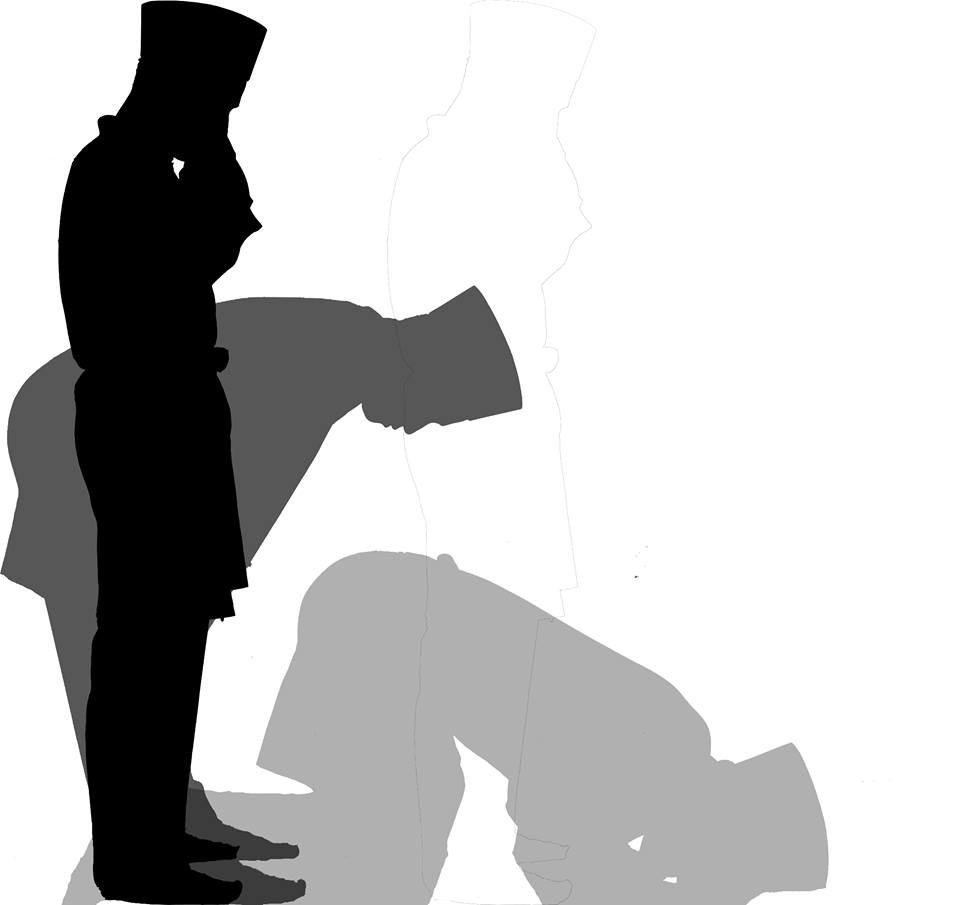
    He (sallallaahu ‘alaihi wa sallam) used to stand in prayer for both obligatory and voluntary prayers, carrying out the command of the Exalted:

    “And stand before Allaah devoutly.” (Baqarah, 2:238).

    As for during a journey, he would pray voluntary prayers on his riding beast.

    He set the example for his ummah to pray during severe fear on foot or while mounted, as has been mentioned, and that is the purpose of the saying of Allaah:

    “Guard strictly your (habit of) prayers, especially the Middle Prayer, and stand before Allaah devoutly. If you fear (an enemy) then pray on foot, or while riding. But when you are in security, celebrate Allaah’s praises in the manner He has taught you, which you did not know before.” (Baqarah, 2:238-9)

    He (sallallaahu ‘alaihi wa sallam) prayed sitting during the illness of which he died.” He also prayed sitting on another occasion before that, when he was injured, and the people behind him prayed standing; so he indicated to them to sit, so they sat (and prayed). When he finished, he said, You were going to do as the Persians and the Romans do: stand for their kings who sit. So do not do so, for the Imaam is there to be followed: when he makes rukoo’, make rukoo’, when he rises, rise; and when he prays sitting, pray sitting [all of you].

    The Prayer of a Sick Person in a Sitting Position:

    ‘Imran ibn Husain (radiallaahu ‘anhu) said, “I was suffering from haemorrhoids (piles), so I asked the Messenger of Allaah (sallallaahu ‘alaihi wa sallam) and he said, Pray standing; if you are not able, then sitting down; if you are not able to do so, then pray lying down.

    ‘Imraan ibn Husain also said, “I asked him (sallallaahu ‘alaihi wa sallam) about the prayer of a man while sitting, so he said: He who prays standing, that is better; he who prays sitting, his reward is half that of the former. He who prays lying down (and in another narration: reclining), has half the reward of the one who sits.
    This applies to the sick person, for Anas (radiallaahu ‘anhu) said, “The Messenger of Allaah (sallallaahu ‘alaihi wa sallam) came out to the people while they were praying sitting due to illness, so he said: Verily, the prayer of one who sits is (worth) half of the prayer of the one who stands.

    Once “he (sallallaahu ‘alaihi wa sallam) visited a sick person and saw him praying (leaning) on a pillow, so he took it and cast it aside. So the man took a stick to pray (leaning) on it, but he took it and cast it aside and said: Pray on the ground if you can, but otherwise make movements with your head, making your sujood lower than your rukoo.”

    Prohibition of Prayer Facing the Grave:

    He (sallallaahu ‘alaihi wa sallam) used to forbid prayer facing the grave, saying: Do not pray towards the graves, and do not sit on them.

    May we never miss even a single prayer and may Allah accept it from us, ameen

  • Facing The Ka’bah

    Facing The Ka’bah

    Learn how to perform SALAH according to SUNNAH [A step-by-step guide]

    Facing The Ka’bah

    When the Messenger of Allaah (sallallaahu ‘alaihi wa sallam) stood for prayer, he would face the Ka’bah in both obligatory and voluntary prayers, and he (sallallaahu ‘alaihi wa sallam) ordered that, saying to the “one who prayed badly”: When you stand for prayer, perform ablution prefectly, then face the qiblah and say takbeer.

    “During a journey, he (sallallaahu ‘alaihi wa sallam) would pray voluntary prayers and witr on his mount, wherever it faced carrying him [east or west].”

    The saying of Allaah, the Exalted, “Wherever you turn, there is the Face of Allaah” (Baqarah, 2:115) applies to this.

    “[Sometimes] when he intended to pray non-obligatory prayers on his she-camel, he would make it face the qiblah, say takbeer, and pray towards wherever his mount turned its face.”

    “He would make rukoo’ and sajdah on his mount by lowering his head, making the sajdah lower than the rukoo’.”

    “When he intended to pray obligatory prayers, he would dismount and face the qiblah.”

    In prayer during severe fear, he (sallallaahu ‘alaihi wa sallam) set the example for his ummah to pray “on foot, standing on their feet, or mounted; facing the qiblah or not facing it”, and he also said, When they (the armies) meet, then it (i.e. the prayer) is takbeer and indication with the head.

    He (sallallaahu ‘alaihi wa sallam) also used to say: What is between the east and the west is qiblah.

    Jaabir (radiallaahu ‘anhu) said:

    “Once, when we were with the Messenger of Allaah (sallallaahu ‘alaihi wa sallam) on an expedition, the sky was cloudy, so we tried to find the Qibla but we differed, so each one of us prayed in a different direction, and each of us drew marks in front of him in order to mark our positions. In the morning, we looked at it and found that we had not prayed towards the Qiblah. So we mentioned this to the Prophet (sallallaahu ‘alaihi wa sallam) [but he did not order us to repeat (the prayer)] and he said: Your prayer was sufficient.”

    “He (sallallaahu ‘alaihi wa sallam) used to pray towards Bait al-Muqaddas [with the Ka’bah in front of him] before the following verse was revealed: “We see the turning of your faces to the heavens; now shall we turn you to a Qiblah that shall please you: turn then your faces in the direction of the Sacred Mosque” (Baqarah 2:144). When it was revealed he faced the Ka’bah. There were people at Qubaa’ praying Fajr when someone came to them and said, ‘Verily the Messenger of Allaah (sallallaahu ‘alaihi wa sallam) has had some of the Qur’aan revealed to him last night and he has been ordered to face the Ka’bah, [verily] so face it’. Their faces were towards Shaam, so they turned round [and their Imaam turned round to face the qiblah along with them].”

    May Allah make us steadfast in offering our salah and accept it from us, ameen


  • Wudu- Part 2

    The steps after washing Hands Up to the Wrist,Mouth,nose and face are mentioned below.

    8.Washing the Hands and Arms Including the Elbows

    Use the left hand to wash the right hand, forearm and elbow, up to and including the elbow making sure that no part of the hand, arm and elbow is left dry, especially between the fingers. Repeat three times. Then use the right hand to wash the left hand, forearm and elbow making sure that no part of the hand, arm and elbow is left dry, especially between the fingers. Repeat three times.

    Allah said, “O you who believe! When you intend to offer prayer, wash your faces and your hands (fore-arms) up to the elbows, rub (by passing wet hands over) your heads, and (wash) your feet up to ankles…” (Al-Ma’idah 5:6)

    Nu’aim ibn Mijmar said, “I saw Abu Hurairah make wudu – he washed his face and completed the wudu, then washed his right hand until he reached the upper arm, then his left hand till he reached the upper arm” – then in the end of the Hadith he said: “This is how I saw Rasoolullah (peace be upon him) make wudu.’” (Sahih – Muslim)

    9.Wiping the Head *

    Wipe the head with the fingers of both hands, starting from the forehead, taking them to the nape of the neck, then bring them back to the forehead. Do this one time.

    The Prophet (peace be upon him) wiped his head with his two hands, moving them forwards and backwards – beginning with the front of the head and (wiping) with them up to his nape then he (peace be upon him) returned them to the place from which he began. (Sahih Al-Bukhari, Muslim, At-Tirmithee, and others)

    Wiping Over the Turban

    Men who wear a head piece that is difficult to remove (such as a turban) should wipe over the head covering. Do this one time.

    Amr ibn Umayyah said, “I saw Rasoolullah (peace be upon him) wipe over his turban and leather socks.” (Sahih – Al-Bukhari and others)


    Wiping Over the Turban and Forelock
    If part of the head is uncovered and it is normally so, then it is preferable to wipe over the part that is uncovered along with the turban. Do this one time.

    Shu’bah said, “The Messenger of Allah (peace be upon him) made wudu and wiped over the front portion of his scalp, his turban and his socks. (Sahih – Muslim)

    Woman’s Head Cover

    As for the woman’s head cover, it is also permissible to wipe over it. This would be the case of a woman that has no private place for wudu (i.e. where non-Mahram men or non-Muslim women may see them). Do this one time.

    Umm Salamah (Radi Allahu anha] used to wipe over her head cover . (See’al-Mughnee’ – Ibn Mundhir)

    10.Wiping the Ears

    Wipe the ears by inserting the tips of the index fingers into the ears, twist them around the folds of the ears then pass the thumb behind the ears from the bottom, upwards. Wipe the ears with the water used for the head. Do this one time.

    Prophet Muhammad (peace be upon him) said, “The two ears are a part of the head.” (Sahih – At-Tirmithee, Abu Dawood, and Ibn Maajah)

    From Abdullah ibn Amr – about the way of performing wudu – he said, “Then he (peace be upon him) wiped his head and entered his two forefingers into his ears and wiped the backs of his ears with his thumbs”. (Sahih – Abu Dawood, An-Nasaa’ee, Ibn Maajah, Ibn Khuzaimah)

    Ar-Rabee bint Mu’awwidh reported that the Prophet (peace be upon him) “Wiped his head with water remaining in his hand” (Hasan – Abu Dawood and others)

    11.Washing the Feet and Ankles

    Use the right hand to wash the right foot up to and including the ankle making sure no part of the foot is left dry, especially between the toes. Use the right hand pinkie finger to wash between the toes starting on the right side of the foot. Repeat three times. Then use the left hand to wash the left foot up to and including the ankle making sure no part of the foot is left dry, especially between the toes. Use the left hand pinkie finger to wash between the toes starting on the right side of the foot. Repeat three times.

    Allah said, “O you who believe! When you intend to offer prayer, wash your faces and your hands (fore-arms) up to the elbows, rub (by passing wet hands over) your heads, and (wash) your feet up to ankles…” (Al-Ma’idah 5:6)

    The Prophet remained behind us on a journey. He joined us while we were performing ablution for the ‘Asr prayer which was over-due and we were just passing wet hands over our feet (not washing them thoroughly) so he addressed us in a loud voice saying twice orthriae, “Save your heels from the fire.”Volume 1, Book 4, Number 164:
    Narrated by Abdullah bin ‘Amr(peace be upon him)

    “Al-Mustaurad said, “When the Prophet (peace be upon him) made wudu he would enter the water between his toes with his little finger.” (Sahih – Abu Dawood, At-Tirmithee, and Ibn Maajah)

    Washing both the feet once up to and including the ankles. It’s not sufficient for one to pass wet hand over the feet or shoes. Under certain conditions masah can be done over leather socks known as khuffs

    Wiping Over the Foot Covering

    Wiping over the top of the foot covering with wet hands instead of washing the feet is allowed, provided that the foot covering has been put on after performing wudu that included washing the feet. Wipe the top of each foot one time, using the right hand for the right foot and the left hand for the left foot. This is allowed for 24 hours from the time of wudu, if not traveling. After this time the feet must be washed. It is allowed for 3 days from the time of wudu, if traveling. After this time the feet must be washed.

    Amr ibn Umayyah said, “I saw Rasoolullah (peace be upon him) wipe over his turban and leather socks.” (Sahih – Al-Bukhari and others)

    Drying the Body-Parts After Wudu

    Drying the body-parts after wudu is a desirable action.

    Aishah (Radi Allahu anha) said, “Rasoolullah (peace be upon him) had a cloth which he used to dry himself with after making wudu.” (Sahih – An-Nasaa’ee)

    How Many Times For Each Action in Wudu

    Each detail of wudu has been performed by Prophet Muhammad (peace be upon him) once, twice or three times (except wiping of head and ears, these should only be done once). Washing each body-part once is obligatory – and the second and third washings are Sunnah – and it is better to wash three times so as to follow the Sunnah of the Prophet (peace be upon him).

    Volume 1, Book 4, Number 185:
    Narrated by Yahya Al-Mazini:

    A person asked ‘Abdullah bin Zaid who was the grandfather of ‘Amr bin Yahya, “Can you show me how Allah’s Apostle used to perform ablution?” ‘Abdullah bin Zaid replied in the affirmative and asked for water. He poured it on his hands and washed them twice, then he rinsed his mouth thrice and washed his nose with water thrice by putting water in it and blowing it out. He washed his face thrice and after that he washed his forearms up to the elbows twice and then passed his wet hands over his head from its front to its back and vice versa (beginning from the front and taking them to the back of his head up to the nape of the neck and then brought them to the front again from where he had started) and washed his feet (up to the ankles).

    Beginning With the Right

    Always wash the right hand before the left hand. Always wash the right foot before the left foot. Always wash the right side before the left side.

    The Prophet used to like to start from the right side on wearing shoes, combing his hair and cleaning or washing himself and on doing anything else.Volume 1, Book 4, Number 169:Narrated by Aisha(peace be upon her)


  • Wudu- Part 1

    Wudu is the Islamic act of washing parts of the body using water. Muslims are required to be clean in preparation for ritual prayers. The Quran says “For Allah loves those who turn to Him constantly and He loves those who keep themselves pure and clean.”

    Muslims are also required to be clean when handling and reading the Qur’an. The Qur’an says “Which none shall touch but those who are clean” . Purification of the body and clothes is called Taharah. Prophet Mohammed said that “Cleanliness is half of faith” To have Taharah for the body, one should do either ghusl or Wudu.

    Cleanliness (Taharah) is an important precondition of Islamic worship. Wudu is an essential part of Cleanliness.

    Salah(prayer) is not valid without Wudu’ or Tayammum(dry Ablution).

    The Qur’anic mandate for wudu comes in the sixth ayat of sura 5 (Al-Ma’ida):
    “O you who believe! when you rise up to prayer, wash your faces and your hands as far as the elbows, and wipe your heads and your feet to the ankles; and if you are under an obligation to perform a total ablution, then wash (yourselves) and if you are sick or on a journey, or one of you come from the privy, or you have touched the women, and you cannot find water, betake yourselves to pure earth and wipe your faces and your hands therewith, Allah does not desire to put on you any difficulty, but He wishes to purify you and that He may complete His favor on you, so that you may be grateful.”

    Allah says in the Qur’an :

    “Surely Allah loves those who turn to Him and those who care for cleanliness” (2:22).

    The Noble Qur’an – At-Tauba 9:108

    And Allâh loves those who make themselves clean and pure (i.e. who clean their private parts with dust [i.e. to be considered as soap) and water from urine and stools, after answering the call of nature].

    The Prophet (Peace be upon him) said, “Allah does not accept prayer without purification ” (Sahih – Muslim and others)

    Click here for the Dua for Wudu (Ablution)

    Steps for performing wudu:

    1.Making Niyyah (Intention) for Wudu

    Before starting the actions of wudu, it is necessary to make niyyah. Make niyyah that the act of performing wudu is for the purpose of purity only. Niyyah should be made in the heart because it is an action of the heart and not of the tongue. Niyyah by words is not approved by the Prophet (Peace be upon him).

    Prophet Muhammad (peace be upon him) said, “Verily the actions are by intention and there is for everyone only what he intended”(Sahih – Fath-ul-Baaree and Muslim)

    2.At-Tasmiyyah (Mentioning Allah’s Name)

    After niyyah, start wudu by saying aloud or silently:

    “Bismillah”

    (In the Name of Allah)

    Prophet Muhammad (peace be upon him) said, “There is no wudu for him who does not mention Allah’s name upon it.” (Sahih – Ibn Maajah, At-Tirmithee, Abu Dawood, and others)

    3.Washing Hands Up to the Wrist:

    Start by using the left hand to wash the right hand up to the wrist making sure that no part of the hand is left dry, especially between each finger. Repeat three times. Then use the right hand to wash the left hand up to the wrist making sure that no part of the hand is left dry, especially between each finger. Repeat three times.

    Humran (Radi Allahu anhu) narrates that he called for water to make wudu and washed his hands three times… then said, “I saw Rasoolullah (peace be upon him) make wudu just as I have made wudu.” (Sahih – Al-Bukhari and Muslim)

    4.Washing Mouth

    Take water into the right hand and wash the mouth by moving the water around inside the mouth making sure to reach the back of the throat. Repeat three times.

    Prophet Muhammad (peace be upon him) said, “When you make wudu then wash your mouth.” (Sahih – Al-Baihaqee)

    5.Sniffing Water Into the Nose and Then Ejecting It

    Put water into the right palm, sniff the water into the nose and breath it into its backmost part, then eject the water from the nose with the fingers on the left hand. Repeat three times.

    The Prophet (peace be upon him) said, “When one of you makes wudu then let him enter water into his nose, then expel it.” (Sahih – Al-Bukhari, Muslim, Abu Dawood)

    Abd Khair said, “We were sitting looking towards Ali (Radi Allahu anhu) – as he made Wudu – and he entered into his mouth a handful of water with his right hand and washed his mouth and nose, then expelled it from his nose with his left hand – he did that three times, then said, ‘Whoever would like to see the way of purification of Rasoolullah (peace be upon him) – then this is his purification.’ (Sahih – Ad-Daarimee)

    Allah’s Apostle (peace be upon him) said, “If anyone of you performs ablution he should put water in his nose and then blow it out and whoever cleans his private parts with stones should do so with odd numbers. And whoever wakes up from his sleep should wash his hands before putting them in the water for ablution, because nobody knows where his hands were during sleep.”Volume 1, Book 4, Number 163:

    6.Washing the Face

    Wash the face, from ear to ear, and forehead to chin making sure that no part of the face is left dry. Repeat three times.

    Allah subhaanahu wa ta’aala said, “O you who believe! When you intend to offer prayer, wash your faces and your hands (fore-arms) up to the elbows, rub (by passing wet hands over) your heads, and (wash) your feet up to ankles…” (Al-Ma’idah 5:6)

    7.Running Water Through the Beard with the Fingers

    Take a handful of water into the right hand and enter it below the chin and rub it through the beard making sure to get all the way down to the roots of the hair.

    Anas (Radi Allahu anhu) narrates that the Prophet (peace be upon him), when he made wudu, used to take a handful of water and enter it below his chin and rub it through his beard and said, “This is what my Lord – the Great and Exalted – has ordered me to do.” (Sahih – Abu Dawood, Al-Baihaqee, Al-Haakim)


  • Merits of Surah Al-Mulk

    Merits of Surah Al-Mulk

    “O Allah! Keep me occupied with Your remembrance and the recitation of the Holy Quran. Forgive me on the day of judgement and Grant me a lofty place in Jannatul Firdous” AMEEN

    REMINDER: Try to recite Surah Mulk everyday. According to a hadith, it will intercede on behalf of its reciter,until he is forgiven.

    “Verily, there is a chapter in the Qur’an which contains thirty Ayahs that will intercede on behalf of its reciter until he is forgiven. (It is): (Blessed be He in Whose Hand is the dominion.”

    This Hadith was collected by At-Tirmidhi and the four Sunan Compilers. At-Tirmidhi said concerning it, “This is a Hasan Hadith.” At-Tabarani and Al-Hafiz Ad-Diya’ Al-Maqdisi both recorded from Anas that the Messenger of Allah Sallal laahoo alaihi wassallaam said,

    “There is a chapter of the Qur’an that will argue on behalf of its reciter until it causes him to enter into Paradise. (It is): (Blessed be He in Whose Hand is the dominion.”


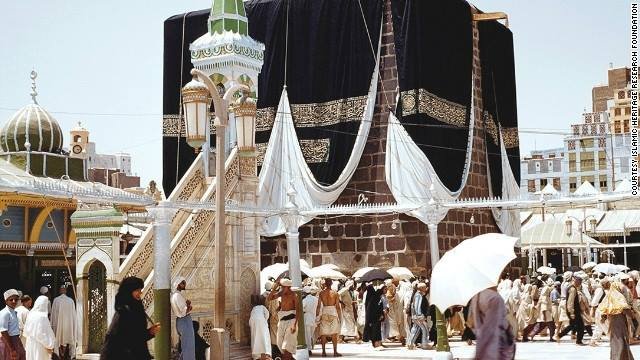
  • The Prophet’s role In The Rebuilding Of The Ka’bah

    The Prophet’s role In The Rebuilding Of The Ka’bah

    The Important Role That The Prophet (Peace be upon him)
    Played In The Rebuilding Of The Ka’bah”

    When the Prophet (Peace be upon him) was 35 years old, which was about five
    years before he received revelation for the first time, Quraish’s
    chieftains gathered to discuss an important matter: the rebuilding
    of the Ka’bah. Due to flood waters and other causes, the walls of
    the Ka’bah began to split; the damage was so severe that the
    Quraish feared that the edifice of the Ka’bah would simply
    collapse at any time.

    The Ka’bah was still upon the construction of Ibraaheem Alaihissalaam, it was
    slightly higher than the height of the average man, and it consisted
    of stones stacked up one on top of another, without any clay to hold
    them together. What the Quraish wanted to do was not a simple
    renovation; rather, they wanted to first destroy the edifice of the
    Ka’bah and then rebuild it with a roof. But they were afraid, feeling
    that doing so might be a form of sacrilege that would lead to evil
    repercussions.

    Al-Waleed ibn Al-Mugheerah, chief of the
    Makhzoom clan, said to the others, “I will begin with its
    destruction’ He picked up an axe, stood beside the Ka’bah, and
    said, “O Allah, we have not gone astray, and we want only that
    which is good.”

    In the end, they decided to begin by demolishing only a part of the
    Ka’bah, and then to wait one night. If, during the night, they saw
    an evil portent, they would stop destroying the Ka’bah and fix the
    part they had already destroyed. But if, during the night, they saw
    no warning sign, they would continue with the demolition and
    reconstruction of the Ka’bah. Since nothing happened
    that night, they did the latter.

    Each subtribe was assigned the task of working on one side of the
    Ka’bah. And though the work involved physical labor that was
    normally performed by the lower classes, the chieftains and
    noblemen participated as well, since the work was considered
    sacred in nature. And so Makkan chieftains would pick up stones
    and raise them up onto the new structure of the Ka’bah.

    When the reconstruction project was almost completed, a heated
    argument broke out. The only step that remained in the
    reconstruction was to place the Black Stone in its place; the
    problem was that every chieftain wanted the honour of picking
    up the Black Stone and placing it in the corner of the Ka’bah.

    Makkah’s oldest chieftain, Umayyah ibn Al-Mugheerah,
    said, “O people of Quraish, concerning that over which you
    differ, appoint the first person to enter the door of the Masjid to
    act as judge over you’

    After they agreed to follow Umayyah’s
    suggestion, they all anxiously waited to see who it was that was
    going to enter the door. To their mutual satisfaction, it was
    Muhammad(Peace be upon him) ibn ‘Abdullah and upon seeing him, they all
    exclaimed, “Here is the Trustworthy One. We are indeed pleased’

    After they told him about their dispute, the Prophet(Peace be upon him) said, “Bring
    me a robe.” When they brought one to him, he placed the Black
    Stone in its middle with his hands and said, “Let each tribe (i.e.,
    subtribe) hold one corner of the robe’ So the leader of each
    subtribe held one corner of the robe; then, together, they raised it
    and carried it to its place, at which point the Prophet (Peace be upon him) removed it
    from the robe and put it in its proper place. Everyone was satisfied,
    and war was averted.

    The reconstruction effort was a success. The Ka’bah was now 18
    arm-spans high, and six wooden columns were used to hold up
    the roof. The door of the Ka’bah was elevated slightly above
    ground level; stairs were constructed between the ground and
    the door to permit entry.

    Morals and Lessons

    1) The way in which the Prophet(Peace be upon him) brought an end to the dispute
    was both wise and just.What was so wonderful
    about the Prophet’s solution was that he was able to satisfy
    the members of all subtribes; this was an example of how Allah guided the Prophet (Peace be upon him) to make wise and correct decisions
    even before the period of Prophethood. Allah decreed for the
    Prophet to enter the As-Safaa door, in order to resolve the
    difficult crisis that was brewing.

    2) The events that took place during Quraish’ s rebuilding of the
    Ka’bah underscore two important points: First, the Prophet’s
    high status and ranking among the Quraish. And second,
    Quraish’ s self -contradictory attitude after the Prophet (Peace be upon him)
    declared his Prophethood, for they were calling him a liar,
    when only a few years earlier they had all declared that he was
    the “Truthful, Trustworthy One’

    3) The Prophet(Peace be upon him) gained two important honours during the
    rebuilding of the Ka’bah: First, the honour of preventing
    bloodshed between Quraish’ s subtribes. And second, he
    had the honour of doing what the Quraish were competing for,
    namely, the honour of placing the Black Stone in its place.

    After you finish reading this, don’t forget to send durood on our Holy Prophet Mohammad Sallal laahoo alaihi wassallam and share this knowledge with your friends and family.

    Click here to read and download the pic of Durood-e-Paak (to send peace and blessings on our HOLY PROPHET (PEACE BE UPON HIM)

  • The Prophet’s Marriage To Khadeejah (Radi Allahu anha)

    The Prophet’s Marriage To Khadeejah (Radi Allahu anha)

    ‘The Prophet’s Marriage To Khadeejah (Radi Allahu anha) ”

    Both her previous husbands having died, Khadeejah bint
    Khuwailid (Radi Allahu anha) was a widow. She was known for her noble character, and the people of the Quraish would call her, “The Pure and Chaste One”’

    She (Radi Allahu anha) was also very wealthy; she would
    engage men to do business on her behalf. After she heard about
    the truthfulness and trustworthiness of Muhammad (Peace be upon him) , she proposed that he do business for her in Ash-Sham, promising to
    give him more than she gave to any other man who did business
    for her. He (Peace be upon him) agreed and left Makkah in the company of
    Maisarah, Khadija Radi Allahu anha’s servant. When Muhammad (Peace be upon him) reached Ash-
    Sham, he sold the merchandise he had with him, and with the
    proceeds purchased other merchandise. When all was said and
    done, he had made a lot of profit for Khadeejah and she felt
    that her wealth was blessed then more so than ever before.

    Throughout the trip, Maisarah witnessed the
    wonderful character, nobility, and truthfulness of the Prophet (Peace be upon him) ;
    in addition to that, Khadijah experienced hitherto unparalleled
    blessings in her wealth.

    Based upon these reasons, she had a heart to heart discussion with her close friend Nafeesah bint Munabbah, telling her about the positive feelings she was having about the
    Prophet (Peace be upon him) . Nafeesah went to the Prophet (Peace be upon him) and proposed to him on behalf of Khadeejah(Radi Allahu anha) . The Prophet (Peace be upon him) was pleased with the proposal, but he nonetheless first went to his uncles to seek their
    advice; they all agreed that he should marry her. And why
    shouldn’t he marry her, for she was the noblest woman among the
    Quraish; after her last husband had died, almost every Makkan
    chieftain proposed to her, and she refused them all.

    And so shortly thereafter the Messenger of Allah (Peace be upon him) married her. She was the
    first woman that the Messenger of Allah (Peace be upon him) married, and he didn’t
    marry any other woman until she died. She gave birth to two of the
    Prophet’s sons and four daughters. The two sons were Al-Qaasim
    and ‘Abdullah (Radi Allahu anhu) – the latter of the two was also known by the names
    of At-Taahir and At-Tayyibb.

    Around the age that he was able to mount a riding animal, Al-
    Qasim died. As for Abdullah (Radi Allahu anhu), he died as a child, prior to the
    beginning of his father’s Prophethood. The Prophet’s daughters
    were Zainab(Radi Allahu anha) , Ruqayyah(Radi Allahu anha) , Umm Khultoom(Radi Allahu anha) , and Fatimah (Radi Allahu anha)
    They all embraced Islam, married, and migrated to Al-
    Madeenah. When the Prophet (Peace be upon him) married Khadeejah(Radi Allahu anha) , he was twenty-five years old and she was forty.

    Morals and Lessons:

    1) Trustworthiness and truthfulness are the two most important
    qualities of a successful businessman. They were the very two
    qualities that prompted Khadeejah (Radi Allahu anha) to ask the Prophet (Peace be upon him) to
    do business on her behalf. Consequently, Allah opened
    many doors of goodness for her.

    2) Business was one of the means through which Allah
    provided sustenance for the Messenger of Allah (Peace be upon him) prior to his
    Prophethood. Later on his life, the Prophet said that, if a
    Muslim businessman is both trustworthy and truthful, then he
    will be resurrected among the Prophets, the truthful ones, and
    the martyrs. Business is an ideal occupation for a Muslim, for a
    businessman is not a slave to others; he does not always have
    to succumb to the whims and desires of an employer. And it is
    not he who needs people, but it is people who need him.

    3) Allah decreed for the Prophet (Peace be upon him) to marry the ideal wife,
    Khadeejah(Radi Allahu anha) , a wife that was both a suitable companion and a
    trusted counselor and helper. Khadeejah (Radi Allahu anha) helped the Prophet (Peace be upon him) during difficult times, and participated alongside him in
    spreading the message of Islam.

    One who invites others to the teachings of Islam is especially in
    need of a pious and good wife. Outside of the home, his days
    are filled with struggle, and he faces constant opposition from
    the enemies of Islam. He, therefore is in dire need, within the
    home, of a partner who will comfort him and provide him with
    the strength and encouragement he needs to fulfill his religious
    duties.

    4) The Prophet (Peace be upon him) tasted the bitterness of losing his sons, just as
    previously in life, he (Peace be upon him) tasted the bitterness of losing his
    parents. It was from the wisdom of Allah that none of his
    sons lived past their childhood. With the death of the Prophet’s
    sons, no one could then be tempted because of them, in terms
    of loving them to an extreme level and claiming Prophethood
    for them. Furthermore, the early deaths of the Prophet’s
    children should serve as a comfort for those who aren’t blessed
    with sons, and for those who are blessed with sons but lose
    them at a very early age.

    The death of the Prophet’s children was a form of tribulation,
    and as the Prophet (Peace be upon him) made it clear, no one is tested more
    severely than the Prophets. It was as if Allah wanted for
    sadness and sensitivity to be part of the Prophet’s existence for a leader who has experienced hardships and tests in life, and endures them with patience and forbearance,
    he is likely to then show compassion and sympathy to others
    who are afflicted with hardships.

    5) The story of the Prophet’s marriage to Khadeejah (Radi Allahu anha) should
    make it clear to a Muslim that the Prophet (Peace be upon him) was not concerned
    with achieving the maximum level of physical pleasures that
    men commonly strive for. Had he been preoccupied with
    that, he would have, as other young men do, sought the hand
    of a woman who was younger than Khadeejah (Radi Allahu anha) or at least one
    who was not older than him. In choosing Khadeejah (Radi Allahu anha) as a wife,
    the Prophet (Peace be upon him) showed that he was primarily concerned with
    her nobility and character; after all, she was known in pre-
    Islamic days as “The Pure and Chaste One.”

    6) The Prophet’s married life with Khadeejah(Radi Allahu anha) refutes the claims
    of those of Islam’s enemies who think that the topic of the
    Prophet’s marriages provides them with a lethal weapon with
    which they can attack Islam. When they talk about the Prophet , they paint the picture of a man who was obsessed with
    satisfying his lusts and desires. But in reality, nothing was
    further from the truth. Up until the age of 25, the Prophet (Peace be upon him)
    lived a chaste life not within the confines of a puritan society,
    but within a society that was replete with evil and ignorance, a
    society wherein one was free to have romantic and sexual
    encounters with as many women as one desired. Then when
    the Prophet (Peace be upon him) did decide to marry, he married a woman
    who was almost twice his age. During the next 15 years of his
    life, there was no Shariah or set of laws to forbid him from
    engaging in extra-marital affairs, as did other members of the
    Quraish, yet he (Peace be upon him) remained faithful to Khadeejah(Radi Allahu anha) , without
    even looking at any other woman, though there were many
    other women that were available.

    The Prophet (Peace be upon him) remained married to Khadeejah (Radi Allahu anha) until she
    died at the age of 65, at a time when the Prophet (Peace be upon him) was himself
    approaching old age. It is between the ages of 20 and 50 that a
    man has especially strong desires for women other than his
    wife; and even though the opportunities to marry other
    women were available to the Prophet (Peace be upon him) , he (Peace be upon him) remained
    monogamous throughout that entire period.

    As for the Prophet (Peace be upon him) marrying ‘Aishah (Radi Allahu anha) later on, as well as
    his other wives, each marriage had a story, a reason, and a
    wisdom behind it. The story behind each marriage highlights
    the wisdom and wonderful character of the Prophet (Peace be upon him)

    After you finish reading this, don’t forget to send durood on our Holy Prophet Mohammad Sallal laahoo alaihi wassallam and share this knowledge with your friends and family.

    Click here to read and download the pic of Durood-e-Paak (to send peace and blessings on our HOLY PROPHET (PEACE BE UPON HIM)

  • The Fijaar War

    The Fijaar War

    ‘The Fijaar War” and the ”Fudool alliance” which took place when Prophet Mohammad (Peace be upon him) was 14 or 15 years old.

    The word Fijaar means wickedness. The reason why
    the war was given this name is that the inviolability of Makkah
    was being defiled, and Arabs considered any defilement of
    Makkah’ s sanctity to be a wicked and heinous crime.

    The Fijaar war pitted the Quraish, along with their allies from the
    Kinaanah tribe, against the Hawaazin tribe. Like most Arab wars
    that were fought during the pre Islamic days of ignorance, the
    Fijaar War began with a trifling dispute and escalated into an all
    out war.

    A man named Urwah Ar-Rahhaal ibn ‘Utbah ibn
    Hawaazin granted his protection to No’maan ibn Al-Mundhir
    and his trading caravan, which was travelling to the marketplace
    of Ukaadh. Al-Barraadh ibn Qais ibn Kinaanah said to Urwah,
    “Will you protect him against the Kinaanah tribe?” Urwah said,
    “Yes”

    When Urwah set out with No’maan and his trading
    caravan, Al-Barraadh followed close behind, waiting for an
    opportune moment to ambush Urwah and kill him by surprise.
    Al-Barraadh’ s tribe, the Kinaanah, found out about what was
    happening, and so they too followed in close pursuit.

    When Urwah and the Hawaazin found out that they
    were being followed, they turned around and headed towards the
    Kinaanah tribe.
    They overtook the Kinaanah tribe before they were able to enter
    the inviolable city of Makkah, and the two tribes fought until
    nightfall, at which time the members of the Kinaanah tribe were
    able to enter Makkah.

    Since Arabs considered Makkah to be holy,
    the Hawaazin tribe did not pursue their enemy. But on the
    following day, the fighting began anew, except that this time
    around, the Quraish entered into the fray, lending their support to
    the Kinaanah tribe.

    In the battles that ensued, the Messenger of
    Allah (Peace be upon him) participated alongside the Quraish, albeit playing a very
    minor role.

    When he mentioned the war later on his life, the Prophet(Peace be upon him) said, “I used to
    hand arrows to my uncles.” What this means is that the Prophet (Peace be upon him)
    would pick up stray arrows fired by the enemies and hand
    them to his uncles. At the time, the Prophet (Peace be upon him) was either
    fourteen or fifteen years old.

    The Fudool Alliance was formed after the Quraish returned from
    the Fijaar War.

    It began when a man from Zubaid – a region in
    Yemen – went to Makkah with some merchandise.

    Al-‘Aas ibn Waail purchased the merchandise from him,but refused to pay for it. The man from Zubaid pleaded with Quraish’ s chieftains to help him, but they refused.

    The Zubaidi man stood beside the Kaaba and called
    out, asking for help.

    Zubair ibn ‘Abdul-Muttalib, one of
    the Prophet’s uncles, stood up and exclaimed, “Will no one help
    him!” As a result of Zubair’s display of anger, a meeting was
    convened at the house of Abdullah ibn Jud’aan.

    The meeting occurred in Dhul-Qai’dah, one of the
    four inviolable months, and those who were present pledged and
    swore by Allah that they would be as one hand in their support of
    any victim against his wrongdoer. They then went together to Al-
    ‘Aas ibn Waail, seized from him the merchandise he had
    wrongfully taken, and returned it to it’s rightful owner.

    The Quraish referred to what happened in the house of Ibn Jud’aan as
    the Fudool Alliance.

    Fudool was an appropriate name for the
    alliance since Fudool comes from the word Fadl, which means
    nobility, superiority, and virtue. The Prophet (Peace be upon him) who was present
    at the above-mentioned meeting, said later on in his life, ”When I
    was a boy, I attended the Al-Muteebeen Alliance (i.e., the Fudool
    Alliance) with my uncles. I would not love to have even red
    camels as a recompense for me breaking (the terms) of that
    alliance.”

    The owner of red camels during those times would
    today be equivalent to a millionaire.

    Morals and Lessons:

    1) The Messenger of Allah (Peace be upon him) felt honoured for being able to
    participate in an alliance that was formed on the basis of
    establishing justice, which shows that no matter who it is
    that is carrying out justice, the act itself deserves to be praised.

    2) The Fudool Alliance was like an oasis within the darkness of
    pre-Islamic ignorance. That the Fudool alliance was formed
    proves that, just because evil pervades a given society, it does
    not mean that that society is completely void of virtuous acts
    and deeds.

    3) No matter what form it takes, wrongdoing is unacceptable. It
    doesn’t matter whether the person being wronged is a Muslim
    or a non-Muslim, a pious man or a sinner, a rich man or a poor
    man; whoever he is, others in society must come to his help.

    4) It is permissible to form an alliance with non-Muslims if justice
    is being served in the process

    5) It is permissible for Muslims to form alliances that are similar
    in intent and content to the Fudool Alliance because they
    establish a goal that is recognized by and encouraged in the
    Shariah; however, in doing so, Muslims must take into
    consideration what is best for Islam and for Muslims in the
    short term and in the long run.

    6) A Muslim must strive to have a positive effect on society, to be
    a person who is remembered for the positive influence he has
    on the events that take place during his lifetime.

    References: [1] ^ Saheeh As-Seerah An-Nabawiyyah by Ibraaheem Al-‘Alee (pg. 59), and Al-
    Albaanee, may Allah have mercy on him, ruled it to be authentic.

    [2] As-Seerah An-Nabawiyyah by Ibn Hishaam (1/134), and Fiqh-us-Seerah by Al-
    Ghadbaan (pg. 102).

    Click here to read and download the pic of Durood-e-Paak (to send peace and blessings on our HOLY PROPHET (PEACE BE UPON HIM)

  • Bahairah- The Monk who met The Messenger Of Allah

    Bahairah- The Monk who met The Messenger Of Allah

    Bahairah- The Monk who met
    The Messenger Of Allah (Peace and blessings be upon him).

    Abu Taalib would often travel to Ash-Sham (Syria and
    surrounding regions) and elsewhere for business purposes. On
    one such journey, he took the Prophet (Peace and blessings be upon him) along with him; also
    accompanying them were Makkah’s chieftains.

    When their caravan overlooked the monastery of the monk Buhairah, they
    made camp and began to unload some of their supplies.
    Meanwhile, to their surprise, Buhairah was coming out to meet
    them. What was so surprising was that though they had
    frequently stopped beside his monastery on previous business
    trips, he would never come out to meet them or even pay any
    attention to them at all.

    As they were removing some of their things, Buhairah began to
    walk among them, until he reached the Messenger of Allah (Peace and blessings be upon him)
    when he stopped, took the Messenger (Peace and blessings be upon him) by the hand, and
    exclaimed, “This is the chief of ‘Alaameen (i.e., mankind, jinns,
    etc.).

    This is the Messenger of the Lord of all that exists. Allah will
    send him as a (form of) mercy to all that exists’ The chieftains of
    the Quraish said, “And what makes you know this?” He said,
    “When you overlooked (this place), as you were arriving from
    ‘Aqaba, every single tree and stone (in the area) fell down in
    prostration, and they do not perform prostration for anyone except
    a Prophet. And indeed, I know him from the seal of Prophethood
    that resembles an apple (in shape) and that is located below his
    shoulder blade’

    He returned to his monastery for a while in order to prepare food
    for them. When he returned with the food, the Messenger of Allah (Peace and blessings be upon him) was busy watching over their camels. Buhairah requested that
    they call him to join them in their meal. He came to them, and there
    was a cloud above him giving him shade. When he arrived, he
    found that everyone else had beaten him to the shade of the tree;
    nonetheless, when he sat down, the shade moved towards him and
    covered him. Seeing this, Buhairah said, “Look! The shade of the
    tree has moved to cover him’

    Buhairah told Abu Taalib and the other chieftains that they
    should return with the Prophet (Peace and blessings be upon him) to their homeland; he
    particularly pleaded with them not to take him to the lands of
    the Romans, for if the Romans were to know about him and were
    to see the signs of his Prophethood, they would certainly kill him.

    As he was explaining this to them, he turned around and saw
    seven Romans approaching. He went to them and asked them
    what they wanted. They said, “News has reached us that the
    (awaited) Prophet is coming out during this month. Every road
    has been blocked with guards, and we were sent to watch over
    this road’ Buhairah said to them, “Suppose Allah wants a matter
    to be fulfilled; can any person prevent that from happening?”

    They said, “No.” He said, “Then pledge allegiance to him.” They
    then joined the chieftains of the Quraish and did no harm to the
    Prophet (Peace and blessings be upon him)

    But by this point, Buhairah was becoming very
    worried; he had managed to convince these guards to leave the
    Prophet (Peace and blessings be upon him) alone, but there was no telling whether more guards
    were on the way or whether the Prophet (Peace and blessings be upon him) would be identified at
    a Roman checkpoint. And so he said to the chieftains of the
    Quraish, “I insist that you tell me who his guardian is.” They said,
    “Abu Taalib is his guardian.” Buhairah then continued to plead
    with Abu Taalib until the latter finally took his advice to heart and
    sent the Prophet (Peace and blessings be upon him) back home to Makkah”

    The story of Buhairah provides us with many insights into the life
    of the Prophet(Peace and blessings be upon him)

    First, we learn that not all priests and rabbis distorted their
    revealed books. There were some among them, albeit very few in
    number, who were sincere and truthful, and who openly
    acknowledged that Muhammad (Peace and blessings be upon him) was indeed a Messenger to
    all of mankind; they knew this from the signs and descriptions
    that they found in their revealed books.

    Second, by the command of Allah, inanimate objects would
    honour the Prophet (Peace and blessings be upon him) , a fact that is established in various
    narrations. Some narrations describe how a particular stone
    would greet the Prophet (Peace and blessings be upon him) , one particular narration describes
    how a tree wept when the Prophet (Peace and blessings be upon him) stopped delivering sermons
    beside it; and the above-mentioned narration describes how trees
    and stones performed prostration to the Prophet (Peace and blessings be upon him) as a way of
    honouring him.

    Third, as precocious as he was by inherent nature, the Prophet (Peace and blessings be upon him)
    also benefited from accompanying his uncle on business trips and benefited from the
    experiences and knowledge of wise men from both the Quraish
    and foreign tribes.

    Fourth, Buhairah knew that if the Romans found out about the
    Prophet (Peace and blessings be upon him) they would kill him. This was significant because, at
    the time, the Roman Empire extended into the lands of the Arabs,
    particularly Ash-Sham (Syria and surroundings regions). And so
    the Romans knew that the awaited Messenger, who was to come
    from the Arabs, would bring an end to their imperial control over
    the region. Since the Prophet (Peace and blessings be upon him) was a threat to the interests of
    their empire, Romans both feared him and ardently desired to
    first find him and then kill him.

    ”Indeed,Allah and His angels send blessings on the Prophet: O you who have believed, Send ye blessings on him, and salute him with all respect” [33:56]

    Click here to read and download the pic of Durood-e-Paak (to send peace and blessings on our HOLY PROPHET (PEACE BE UPON HIM)